Uganda's coffee industry is experiencing a historic renaissance, cementing its position as Africa's premier coffee exporter. With Robusta production driving unprecedented growth, the sector has recently surpassed the $800 million mark in export value, signaling a transformative era for the nation's agricultural economy. For institutional investors and policymakers, this surge represents more than just a commodity boom—it highlights the immense potential of digitizing Africa's agricultural assets through platforms like AfriVest.
The Rise of Robusta: Driving Uganda's Export Dominance
Uganda has officially become Africa's largest producer of Robusta coffee, which accounts for approximately 80% of the nation's total coffee output. This dominance is not accidental; it is the result of strategic investments in agricultural practices, favorable climatic conditions, and a resilient farming community. In recent years, Uganda's coffee exports have consistently broken records. For instance, in May 2025 alone, the country exported a staggering 47,606 tonnes of coffee, generating $243 million in revenue. Annually, the industry is now approaching the $1 billion milestone, with Robusta leading the charge.
Economic Impact: Coffee's Contribution to GDP
The economic footprint of coffee in Uganda cannot be overstated. As the country's top-earning export crop, coffee plays a critical role in stabilizing the national economy and providing livelihoods for millions. Smallholder farmers are the backbone of this industry, contributing between 85% and 90% of total production. While historical data indicates coffee exports contribute around 1.5% directly to the Gross Domestic Product (GDP), its broader economic impact—including job creation, rural development, and foreign exchange earnings—is far more substantial. The sector's growth is a testament to the resilience and potential of East Africa's agricultural markets.
Regional Context: East Africa's Agricultural Powerhouse
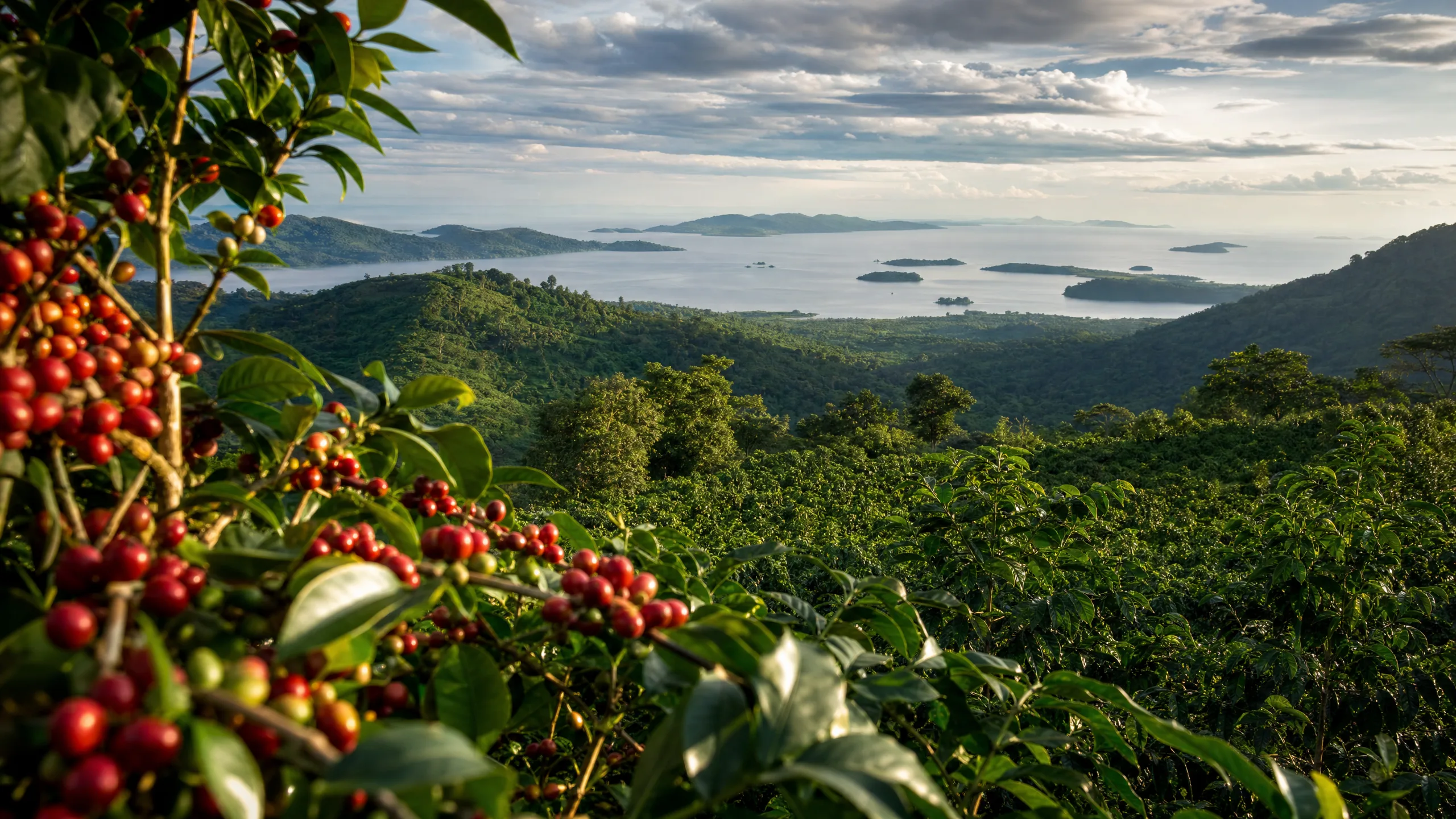
Uganda's success is deeply intertwined with its regional context. Situated in the heart of East Africa, the country benefits from a unique topography and climate ideal for coffee cultivation. The central plateau, surrounded by high volcanic mountains and rainforests, provides the perfect environment for Robusta to thrive. This geographical advantage, combined with targeted government initiatives to boost production capacity, has allowed Uganda to outpace traditional regional competitors. The nation's ability to scale production from 6.05 million bags in 2021 to its current record-breaking levels underscores its status as an agricultural powerhouse.
The Future: Digital Infrastructure and Tokenization
As Uganda's coffee sector continues its upward trajectory, the integration of digital infrastructure presents a compelling opportunity for future growth. The traditional agricultural supply chain is ripe for innovation. By leveraging blockchain technology and tokenization, platforms like AfriVest can digitize these tangible assets, offering unprecedented transparency, efficiency, and access to global capital markets.
Tokenizing coffee yields or agricultural land can democratize investment, allowing institutional and retail investors to participate directly in Uganda's agricultural success. This forward-looking approach not only provides farmers with better access to financing but also ensures that the economic benefits of the coffee renaissance are distributed more equitably. The intersection of agriculture and fintech is where the next wave of African economic transformation will occur, and Uganda's coffee industry is perfectly positioned to lead the way.