When you taste the rich, complex flavor of premium vanilla in your favorite dessert, there is an 80% chance it originated from a single island nation off the coast of East Africa. Madagascar has established an unprecedented monopoly on one of the world's most labor-intensive and valuable agricultural commodities. For institutional investors and policymakers looking at Africa's agricultural sector, the Malagasy vanilla industry presents a fascinating case study in market dominance, supply chain vulnerabilities, and the transformative potential of digital asset tokenization.
The SAVA Region: The Heart of Global Vanilla Production
The northeastern SAVA region of Madagascar—comprising Sambava, Antalaha, Vohemar, and Andapa—is the undisputed capital of the global vanilla trade. This specific microclimate provides the perfect conditions for Vanilla planifolia, the orchid species that produces Bourbon vanilla.
Currently, an estimated 70,000 to 80,000 smallholder farmers in this region cultivate the crop. These farmers are responsible for producing between 80% and 90% of the world's Bourbon vanilla. In recent years, Madagascar's annual production has fluctuated between 1,400 and 3,100 metric tons, depending on weather conditions and market dynamics. This staggering concentration of production means that any disruption in the SAVA region—be it a cyclone, political instability, or climate change—sends immediate shockwaves through the global flavor and fragrance markets.
Economic Impact: A Pillar of Madagascar's GDP
The economic significance of vanilla to Madagascar cannot be overstated. The global vanilla market is valued at approximately $3.6 billion, with the raw bean trade representing a critical segment. In 2022, Madagascar's vanilla exports amounted to $583 million, and in 2023, the export value stood at approximately $271 million for over 1,400 metric tons.
This single crop provides a massive contribution to the country's economy. It accounts for roughly 5% to 10% of Madagascar's total Gross Domestic Product (GDP). Furthermore, vanilla makes up an astounding 62% of the nation's agricultural sector income and represents nearly 60% of its total export value. The United States, France, and Canada remain the primary destinations for these exports, with the US alone importing over $70 million worth of Malagasy vanilla beans annually.
Price Volatility and Supply Chain Challenges
Despite its market dominance, the Malagasy vanilla industry is plagued by extreme price volatility. Over the past decade, prices have swung wildly from as low as $50 per kilogram to staggering highs of over $600 per kilogram. This volatility is driven by a combination of factors:
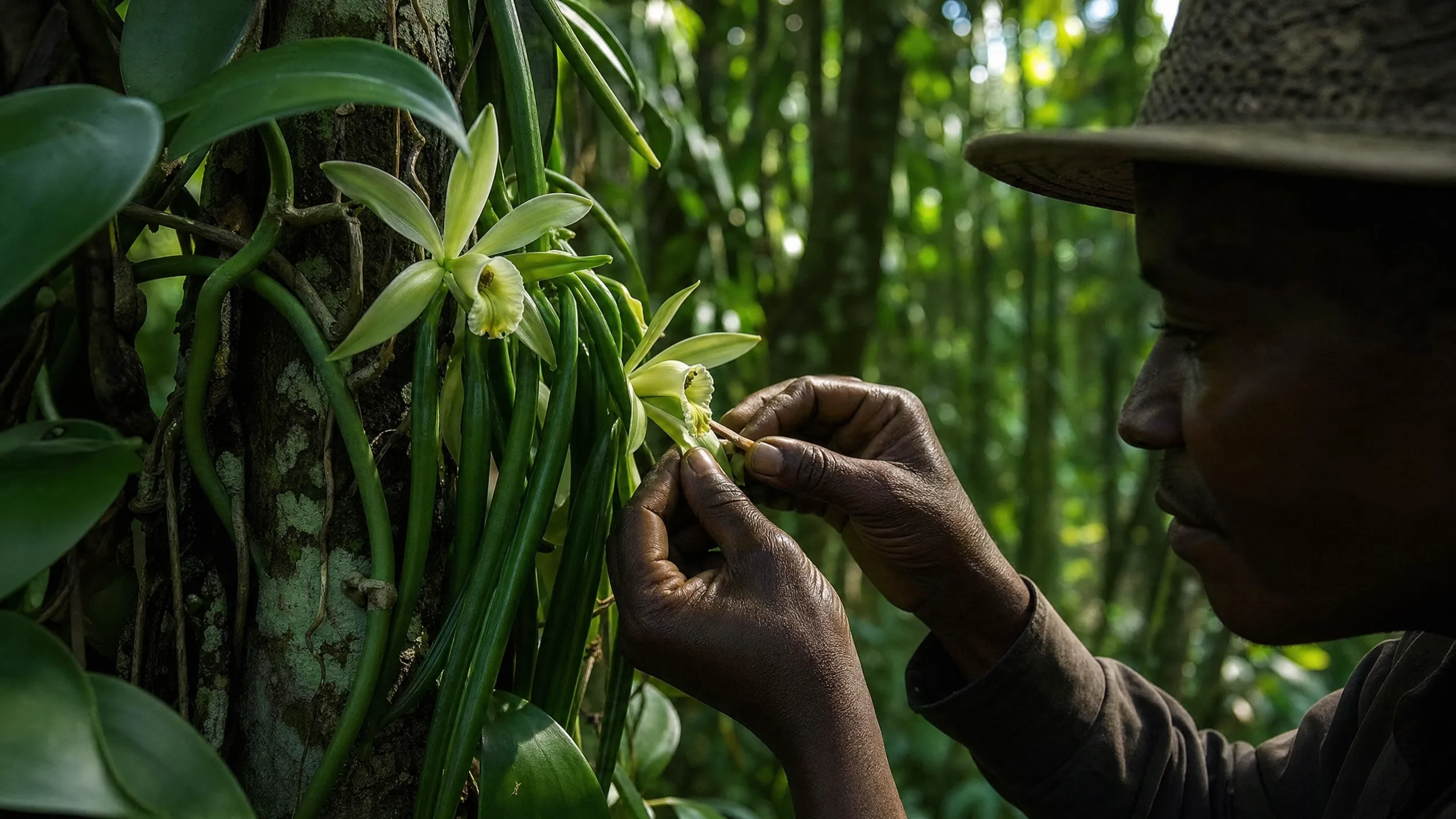
- Labor-Intensive Cultivation: Each vanilla orchid must be hand-pollinated during a brief 12-to-24-hour window, making it one of the most labor-intensive crops in the world.
- Climate Vulnerability: The SAVA region is highly susceptible to cyclones, which can wipe out years of cultivation in a matter of hours.
- Security Concerns: High prices often lead to crop theft, forcing farmers to harvest beans prematurely, which degrades the overall quality of the export.
To stabilize the market, the Malagasy government has periodically intervened, such as enforcing minimum export prices. However, these measures have met with mixed success, highlighting the need for more robust, market-driven solutions to ensure fair compensation for farmers and stable pricing for global buyers.
The Future: Digital Infrastructure and Tokenization
The traditional vanilla supply chain is opaque, fragmented, and inefficient. However, this presents a significant opportunity for technological intervention. By digitizing Africa's agricultural assets, platforms like AfriVest can revolutionize how commodities like Madagascar vanilla are traded and financed.
Tokenization of agricultural assets can provide unprecedented transparency and traceability from the SAVA region farms to global buyers. By creating digital twins of physical vanilla yields, investors can participate directly in the agricultural economy, providing much-needed liquidity to smallholder farmers while mitigating the risks associated with price volatility.
As we look to the future, the integration of blockchain technology and digital infrastructure will not only secure Madagascar's position as the world's vanilla capital but also unlock new avenues for sustainable investment and economic growth across the African continent. The digitization of the $600 million vanilla supply chain is just the beginning of a broader transformation in global agricultural trade.