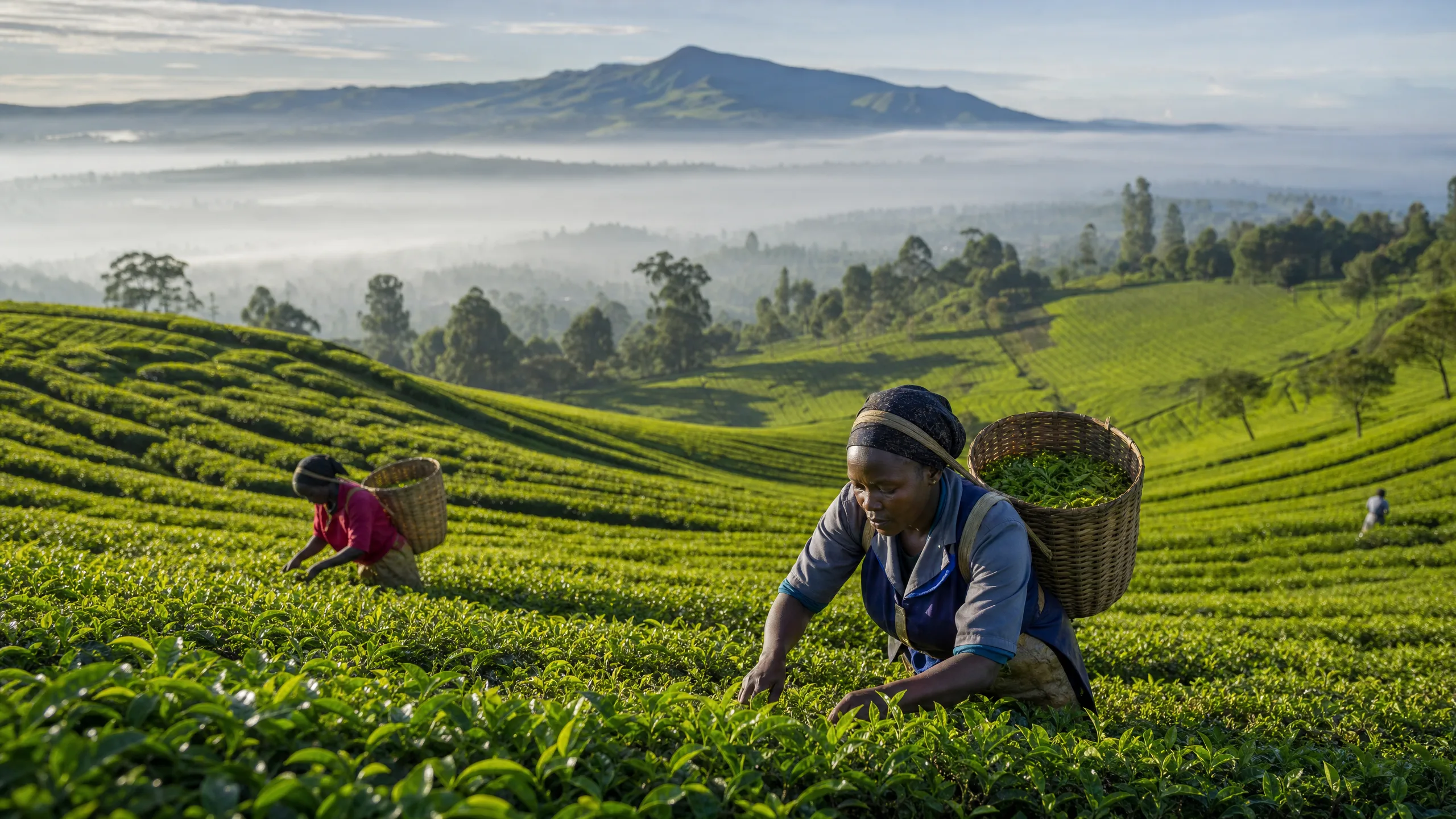
Kenya’s tea industry stands as a cornerstone of the nation’s economy and a dominant force in the global agricultural market. As the world’s largest exporter of black tea, Kenya generates approximately $1.5 billion annually from this vital sector. For institutional investors and policymakers, understanding the dynamics of Kenya's tea production, export mechanisms, and future opportunities is essential for navigating Africa's agricultural landscape.
The Economic Engine of East Africa
Tea is not merely a crop in Kenya; it is an economic engine that drives significant growth and development. The industry contributes approximately 1.2% to Kenya's Gross Domestic Product (GDP) and provides livelihoods for millions of citizens. In 2024, total earnings from tea reached an impressive Kshs. 215.21 billion, with exports accounting for Kshs. 181.69 billion. This robust performance underscores the sector's resilience and its critical role in generating foreign exchange reserves for the country.
The scale of production is equally remarkable. Over recent years, Kenya has consistently produced an average of over 500 million kilograms of tea annually, with export volumes reaching 594.5 million kilograms in 2024. This massive output is supported by a combination of favorable climatic conditions, particularly in the highlands, and a well-structured agricultural framework that empowers both large-scale estates and smallholder farmers.
The Mombasa Tea Auction: A Global Hub
At the heart of Kenya's tea trade is the Mombasa Tea Auction, the second-largest black tea auction center in the world. This bustling hub serves as the primary marketplace where Kenyan tea, along with produce from neighboring East African countries, is traded internationally. The auction's efficiency and transparency are crucial for price discovery and market stability.
Despite facing challenges such as fluctuating global prices and occasional oversupply—evidenced by periods where millions of kilos remained unsold—the Mombasa auction remains a vital conduit for global tea distribution. The average prices at the auction, often hovering around $2.41 per kilogram for premium grades, reflect the high quality of Kenyan tea, which is sought after by buyers from major markets including Pakistan, Egypt, and the United Kingdom.
Regional Production and Key Players
Kenya's tea cultivation is concentrated in the fertile highlands west and east of the Great Rift Valley. Regions such as Kericho, Bomet, Nandi, and Murang'a are synonymous with high-quality tea production. These areas benefit from rich volcanic soils, adequate rainfall, and optimal altitudes, creating the perfect environment for the Camellia sinensis plant.
The industry is characterized by a unique dual structure. While multinational corporations operate large estates, the backbone of the sector is the smallholder farmers, managed under the Kenya Tea Development Agency (KTDA). The KTDA oversees numerous factories and ensures that small-scale growers receive fair compensation and access to global markets. This cooperative model not only boosts production but also ensures equitable wealth distribution among rural communities.
Challenges and Strategic Responses
Despite its success, the Kenyan tea industry faces several headwinds. Climate change poses a significant threat, with unpredictable weather patterns affecting crop yields. Additionally, the sector must navigate global market volatility, shifting consumer preferences, and the need for sustainable farming practices.
In response, stakeholders are increasingly adopting climate-smart agricultural techniques and investing in research to develop drought-resistant tea varieties. Furthermore, there is a concerted effort to diversify export destinations, with a growing focus on emerging markets in Asia, particularly China, to reduce reliance on traditional buyers and mitigate geopolitical risks.
The Future: Digital Infrastructure and Tokenization
Looking ahead, the future of Kenya's tea industry lies in modernization and the integration of digital infrastructure. The digitization of agricultural assets presents a transformative opportunity to enhance supply chain transparency, improve access to finance for farmers, and streamline export processes.
Platforms like AfriVest are at the forefront of this revolution, exploring the tokenization of agricultural commodities. By converting physical tea assets into digital tokens, investors can gain fractional ownership, thereby increasing liquidity and democratizing access to this lucrative market. This innovative approach not only promises to attract a new wave of institutional investment but also ensures that the foundational pillars of Kenya's economy are fortified for the digital age.