The WAEMU Zone: Harmonized Financial Regulations Across West African Monetary Union
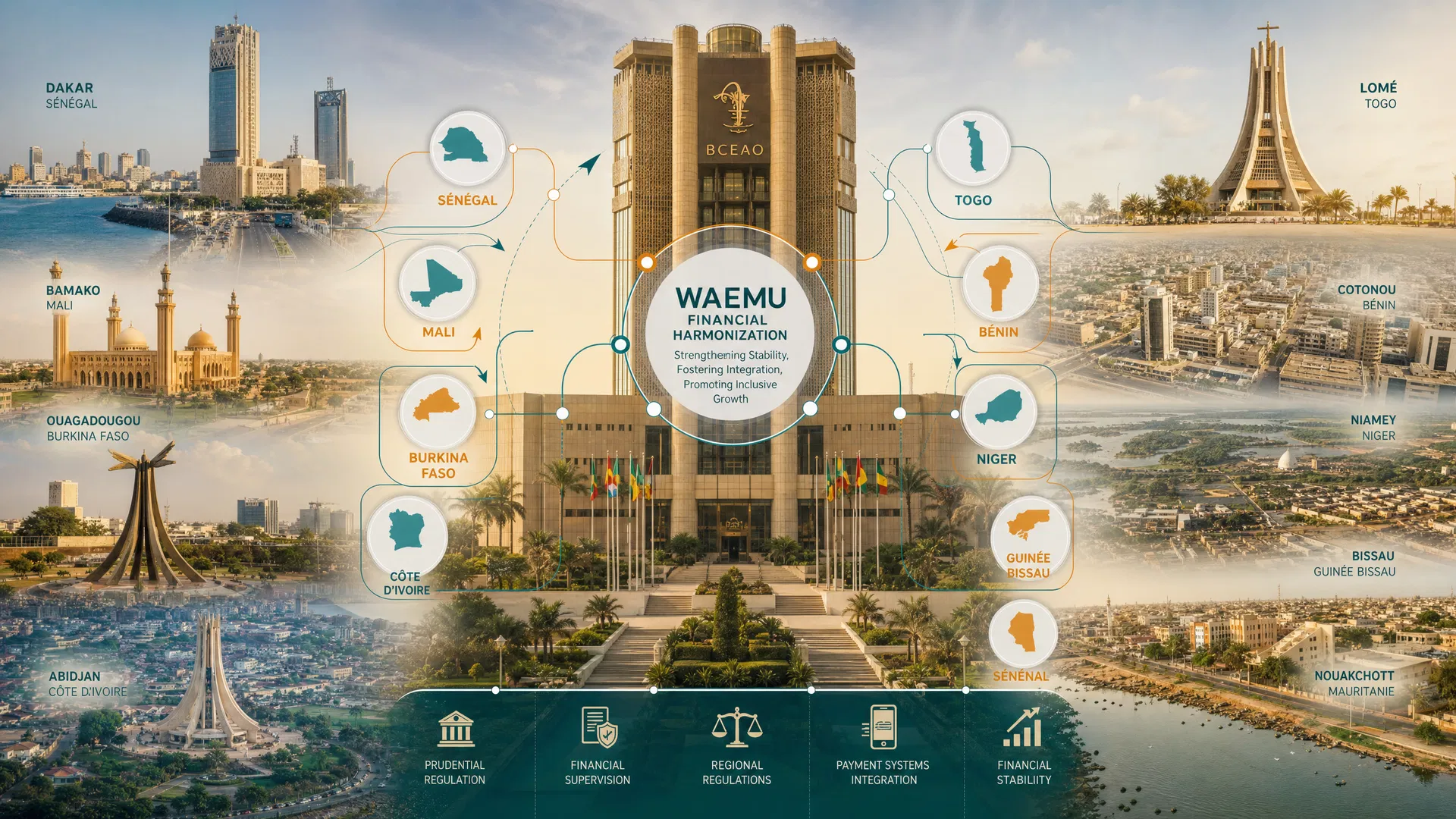
The West African Economic and Monetary Union (WAEMU), comprising eight member states sharing the CFA franc, is undergoing a profound transformation in its financial regulatory landscape. As digital assets, fintech innovations, and cross-border payment systems gain unprecedented traction across the continent, the Central Bank of West African States (BCEAO) is actively modernizing its frameworks. For institutional investors, policymakers, and fintech operators, understanding this evolving regulatory environment is critical. AfriVest, as Africa’s sovereign digital asset infrastructure platform, recognizes that navigating the WAEMU zone requires a deep comprehension of both regional harmonization efforts and the specific compliance mandates that govern digital financial services.
The regulatory background of the WAEMU zone is anchored in the BCEAO’s mandate to ensure monetary and financial stability while fostering economic integration. Historically, the region’s financial regulations were designed for traditional banking and microfinance institutions. However, the rapid proliferation of digital technologies—ranging from mobile money to asset tokenization and stablecoins—has necessitated a paradigm shift. In response, the BCEAO has initiated several strategic measures, including the establishment of the FinTech Committee and the Committee in charge of developing regulations on cryptocurrencies (C-CRYPTO). These bodies are tasked with formulating comprehensive frameworks that address the unique challenges posed by digital assets, ensuring that innovation does not compromise the integrity of the financial system.
A cornerstone of the recent regulatory updates is the revised foreign exchange regulation adopted in December 2024. This reform significantly strengthens the BCEAO’s control over financial flows, primarily to bolster the region’s Anti-Money Laundering and Combating the Financing of Terrorism (AML/CFT) capabilities. The new rules mandate that direct and portfolio investments must be declared to the Ministry of Finance and the BCEAO within 30 days. Furthermore, transactions must be domiciled in locally approved intermediaries. For digital asset platforms operating across borders, these stringent reporting and domiciliation requirements introduce new layers of administrative complexity. Compliance is no longer merely a best practice; it is a fundamental prerequisite for market entry and sustained operations within the WAEMU jurisdiction.
The compliance implications of these harmonized regulations extend deeply into data protection and privacy. As digital asset infrastructures like AfriVest process vast amounts of sensitive financial and personal data, they must align with a complex web of regional and international standards. While the WAEMU zone is developing its specific data governance frameworks, operators must also consider broader African data protection laws, such as South Africa’s Protection of Personal Information Act (POPIA), Nigeria’s Data Protection Act (NDPA), and the Malabo Convention on Cyber Security and Personal Data Protection. Adherence to these diverse legal instruments requires robust, interoperable digital identity solutions and secure data architectures that can seamlessly navigate the nuances of cross-border data flows while maintaining the highest standards of privacy and security.
Enforcement mechanisms within the WAEMU zone are becoming increasingly sophisticated. The BCEAO, in collaboration with national monitoring committees, exercises rigorous oversight over financial institutions and authorized intermediaries. The central bank has the authority to impose significant sanctions for non-compliance, particularly concerning the repatriation of foreign currency and adherence to AML/CFT protocols. For fintech operators and digital asset platforms, this means that regulatory scrutiny is continuous and pervasive. The establishment of the Interoperable Instant Payment System Platform (PI-SPI) further illustrates the BCEAO’s commitment to creating a secure, monitored environment for digital transactions. Platforms must therefore integrate advanced regulatory technology (RegTech) solutions to automate compliance reporting and ensure real-time adherence to evolving mandates.
To successfully operate within the WAEMU zone, digital asset platforms must proactively prepare for a highly regulated future. This preparation involves adopting institutional-grade infrastructure that inherently supports compliance with international standards such as ISO 20022, the Financial Action Task Force (FATF) recommendations, and the International Organization of Securities Commissions (IOSCO) principles. AfriVest’s approach—focusing on tokenization, Central Bank Digital Currency (CBDC) infrastructure, and stablecoins—demonstrates the necessity of building systems that are not only technologically advanced but also deeply integrated with regulatory expectations. By prioritizing transparency, security, and interoperability, platforms can mitigate regulatory risks and position themselves as trusted partners in the region’s financial ecosystem.
Looking forward, the harmonization of financial regulations across the WAEMU zone is a critical catalyst for Africa’s broader digital economy transformation. As the BCEAO continues to refine its frameworks for crypto-assets and digital innovations, the region is poised to become a hub for secure, inclusive, and efficient financial services. The ongoing exploration of a potential CBDC by the BCEAO underscores a forward-thinking approach that seeks to harness the benefits of digital currencies while mitigating systemic risks. For institutional investors and fintech operators, the WAEMU zone offers immense opportunities, provided they navigate the regulatory landscape with diligence and strategic foresight. Ultimately, the successful integration of digital assets into the West African economy will depend on collaborative efforts between regulators and industry leaders to build resilient, compliant, and innovative financial infrastructures.