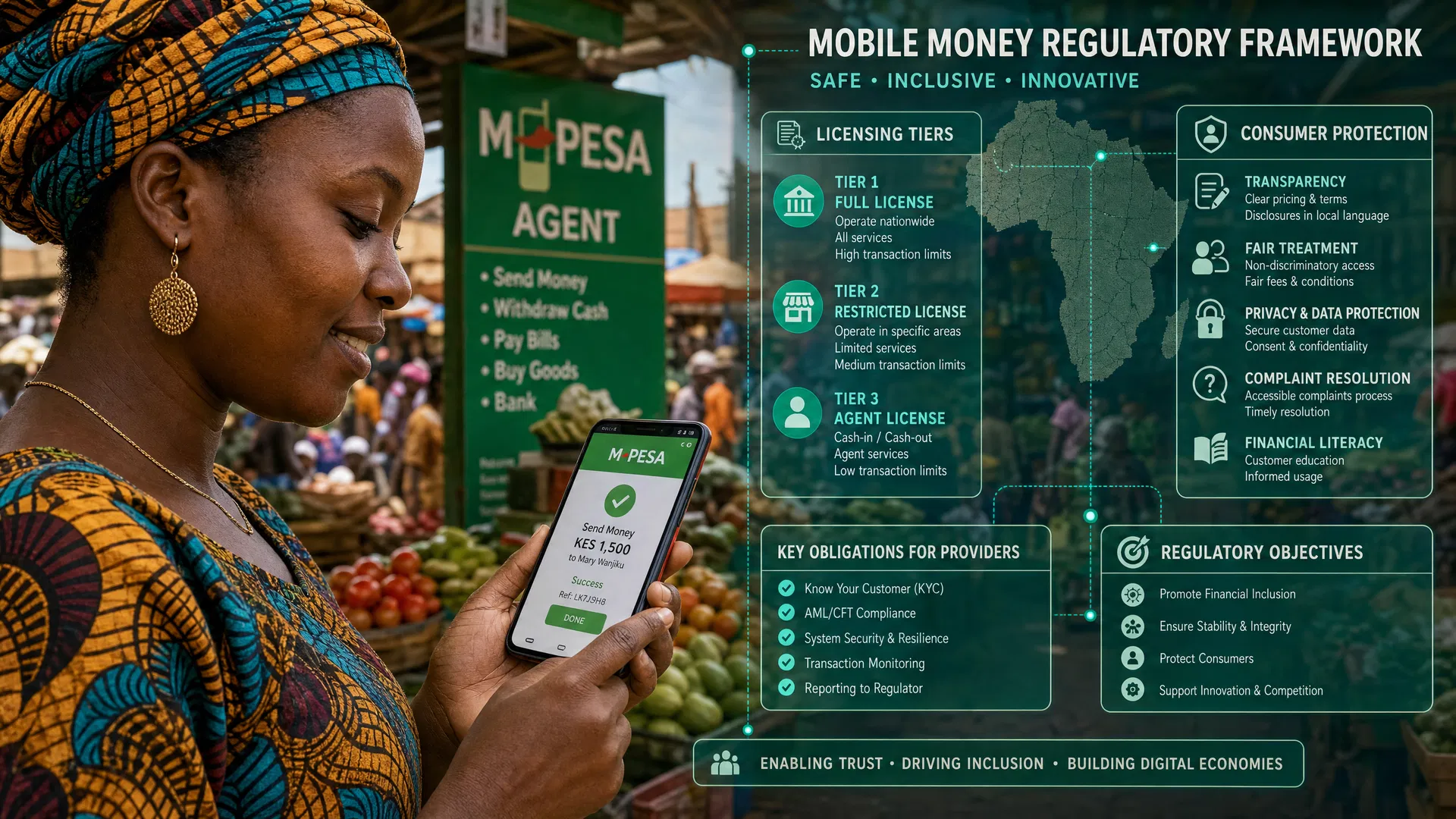

# Tanzania's Electronic Transactions Act and Digital Finance Governance Framework: A Guide for Digital Asset Platforms
The digital economy in Africa is undergoing a profound transformation, driven by rapid technological adoption and an evolving regulatory landscape. For institutional investors, policymakers, and fintech operators, understanding the nuances of regional regulations is paramount. In Tanzania, the regulatory environment for digital finance and electronic transactions is anchored by the Electronic Transactions Act of 2015 and the recently introduced Fintech Regulatory Sandbox Regulations of 2024. As AfriVest builds Africa's sovereign digital asset infrastructure—encompassing tokenization, Central Bank Digital Currency (CBDC) infrastructure, digital identity, and stablecoins—navigating Tanzania's framework is essential for ensuring compliance and fostering financial inclusion.
Regulatory Background and Evolution
Tanzania's journey toward a comprehensive digital finance governance framework began with the enactment of the Electronic Transactions Act (ETA) in 2015. The ETA was designed to provide legal recognition for electronic transactions, e-contracts, and electronic signatures, thereby laying the foundational legal infrastructure for the country's digital economy. This legislation was a critical step in aligning Tanzania with global digital commerce standards and facilitating the growth of e-government services.
However, as the financial technology sector expanded, the need for more specialized regulations became apparent. The Bank of Tanzania (BoT), the principal financial regulator, initially adopted a cautious stance toward digital assets. In November 2019, the BoT issued a public notice cautioning against the trading and usage of virtual currencies, emphasizing that the Tanzanian Shilling remained the sole legal tender. Despite this, the growing influence of digital currencies prompted a shift in perspective. In 2021, President Samia Suluhu Hassan urged the BoT to prepare for potential crypto adoption, signaling a more progressive approach.
This shift culminated in the introduction of the Fintech (Regulatory Sandbox) Regulations in July 2024. These regulations aim to create a controlled environment where fintech companies can test innovative financial solutions, including applications using distributed ledger technologies, without immediately facing the full burden of regulatory compliance. Furthermore, the Finance Act of 2024 introduced a 3% withholding tax on payments made by digital asset exchange platforms to resident owners, indicating a move toward formalizing and taxing digital asset transactions.
Key Provisions of the Electronic Transactions Act
The Electronic Transactions Act of 2015 establishes several key provisions that are vital for digital asset platforms operating in Tanzania. Primarily, the Act ensures the legal validity of data messages and electronic contracts. It stipulates that a transaction or contract cannot be denied legal effect solely on the grounds that it is in electronic form. This provision is crucial for digital asset platforms, as it legitimizes smart contracts and electronic agreements that underpin tokenization and decentralized finance (DeFi) operations.
Additionally, the ETA provides for the recognition of electronic signatures and secure electronic signatures. For platforms like AfriVest, which deal with digital identity and secure transactions, compliance with these signature requirements is necessary to ensure the enforceability of user agreements and transaction authorizations. The Act also addresses consumer protection in the digital realm, mandating that service providers offer clear information about their services and terms of use, which aligns with broader regional data protection standards.
The Fintech Regulatory Sandbox and Compliance Implications
The introduction of the Fintech Regulatory Sandbox Regulations in 2024 represents a significant development for digital finance governance in Tanzania. The sandbox allows fintech companies and financial service providers to test new products, such as digital lending, money transfer services, and blockchain applications, in a live market environment under the BoT's supervision.
For digital asset platforms, participating in the sandbox offers a pathway to regulatory clarity. Applicants must submit a comprehensive business plan, a risk profile detailing potential risks and mitigation strategies, and evidence of funding. The testing period typically lasts for twelve months, during which participants must submit quarterly progress reports detailing key milestones, identified risks, and customer complaints.
Compliance implications extend beyond the sandbox. Participants are mandated to adhere to the Personal Data Protection Act No. 11 of 2022. This requirement is particularly relevant for platforms handling sensitive financial data and digital identities. Ensuring compliance with Tanzania's data protection laws is essential for aligning with regional frameworks such as South Africa's POPIA, Kenya's DPA, and the Malabo Convention, thereby facilitating cross-border operations and interoperability.
Enforcement Mechanisms and Regulatory Oversight
Enforcement of digital finance regulations in Tanzania is primarily overseen by the Bank of Tanzania and the relevant data protection authorities. The BoT holds the authority to approve, reject, or revoke participation in the Fintech Regulatory Sandbox. If a participant violates any condition of the sandbox, the BoT may issue warnings or suspend the participant for up to one year.
Furthermore, the BoT's oversight extends to ensuring that financial solutions do not compromise the stability of the financial system. The integration of digital assets into the broader economy requires robust Anti-Money Laundering (AML) and Combating the Financing of Terrorism (CFT) measures. While specific comprehensive cryptocurrency regulations are still evolving, platforms must adhere to existing financial regulations and the National Payment Systems Act of 2015, which prohibits unlicensed digital payments.
The introduction of the 3% withholding tax on digital asset transactions also brings the Tanzania Revenue Authority (TRA) into the enforcement landscape. Platforms must ensure accurate reporting and tax compliance to avoid penalties and maintain their operational licenses.
Preparing for the Future: Strategic Imperatives for Platforms
As Tanzania continues to refine its digital finance governance framework, digital asset platforms must adopt a proactive approach to compliance and strategic planning. Platforms like AfriVest should prioritize engagement with the BoT, potentially leveraging the Fintech Regulatory Sandbox to test and validate their sovereign digital asset infrastructure, including CBDC integration and tokenization models.
Preparation also involves implementing robust data protection and cybersecurity measures that comply with the Personal Data Protection Act of 2022. By aligning their operations with both local laws and international standards (such as ISO 20022 and FATF guidelines), platforms can build trust with institutional investors and regulatory bodies.
Furthermore, platforms must stay abreast of tax obligations, ensuring that their systems can accurately calculate and remit the newly introduced withholding tax on digital asset transactions. This proactive compliance not only mitigates legal risks but also positions the platform as a responsible actor in the evolving digital economy.
Conclusion
Tanzania's regulatory landscape for digital finance is transitioning from a cautious approach to one that cautiously embraces innovation. The foundational Electronic Transactions Act of 2015, coupled with the progressive Fintech Regulatory Sandbox Regulations of 2024, provides a structured pathway for the integration of digital assets into the national economy. For platforms like AfriVest, understanding and navigating these regulations is critical for building resilient, compliant, and scalable digital asset infrastructure. As Africa's digital economy continues to expand, harmonizing operations with regional and international standards will be the key to unlocking the full potential of digital finance, driving financial inclusion, and fostering sustainable economic growth across the continent.