# Namibia's Financial Intelligence Act and AML/CFT Compliance for Digital Platforms
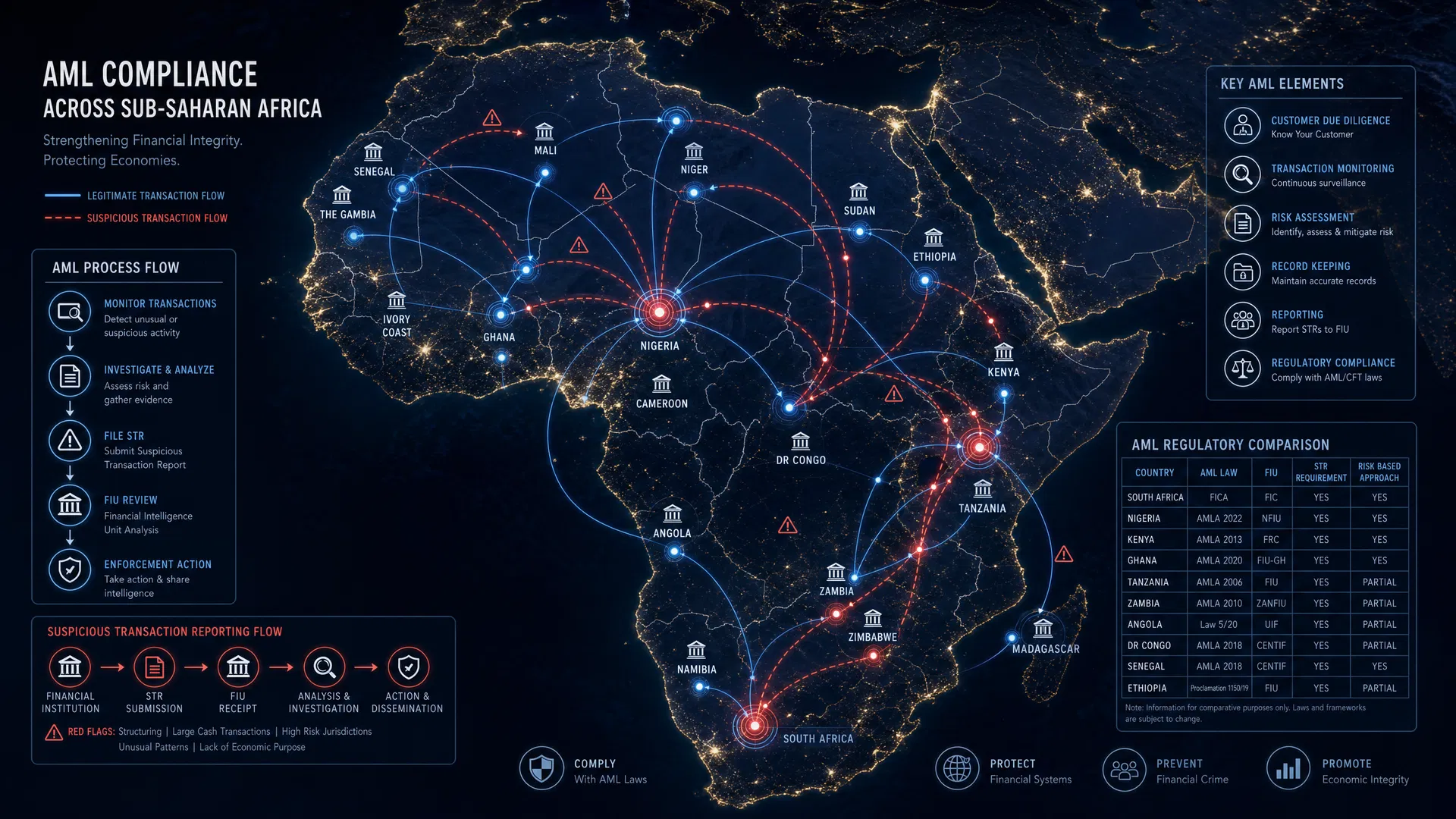
The digital revolution is fundamentally reshaping the global financial landscape, with virtual assets emerging as a powerful force in how financial transactions are conducted. In Africa, this transformation is particularly significant, as the continent is well-positioned to harness fintech solutions to improve financial inclusion and expand access to essential services. As AfriVest builds Africa's sovereign digital asset infrastructure, aligning with international standards and regional frameworks is paramount. Namibia has emerged as a key player in this regulatory evolution, taking decisive steps to integrate digital assets into its financial system while safeguarding against illicit activities. This article explores Namibia's regulatory landscape, focusing on the Financial Intelligence Act (FIA) and the Virtual Assets Act (VAA) of 2023, and their implications for Anti-Money Laundering and Countering the Financing of Terrorism (AML/CFT) compliance for digital platforms.
The Regulatory Background: Establishing a Secure Foundation
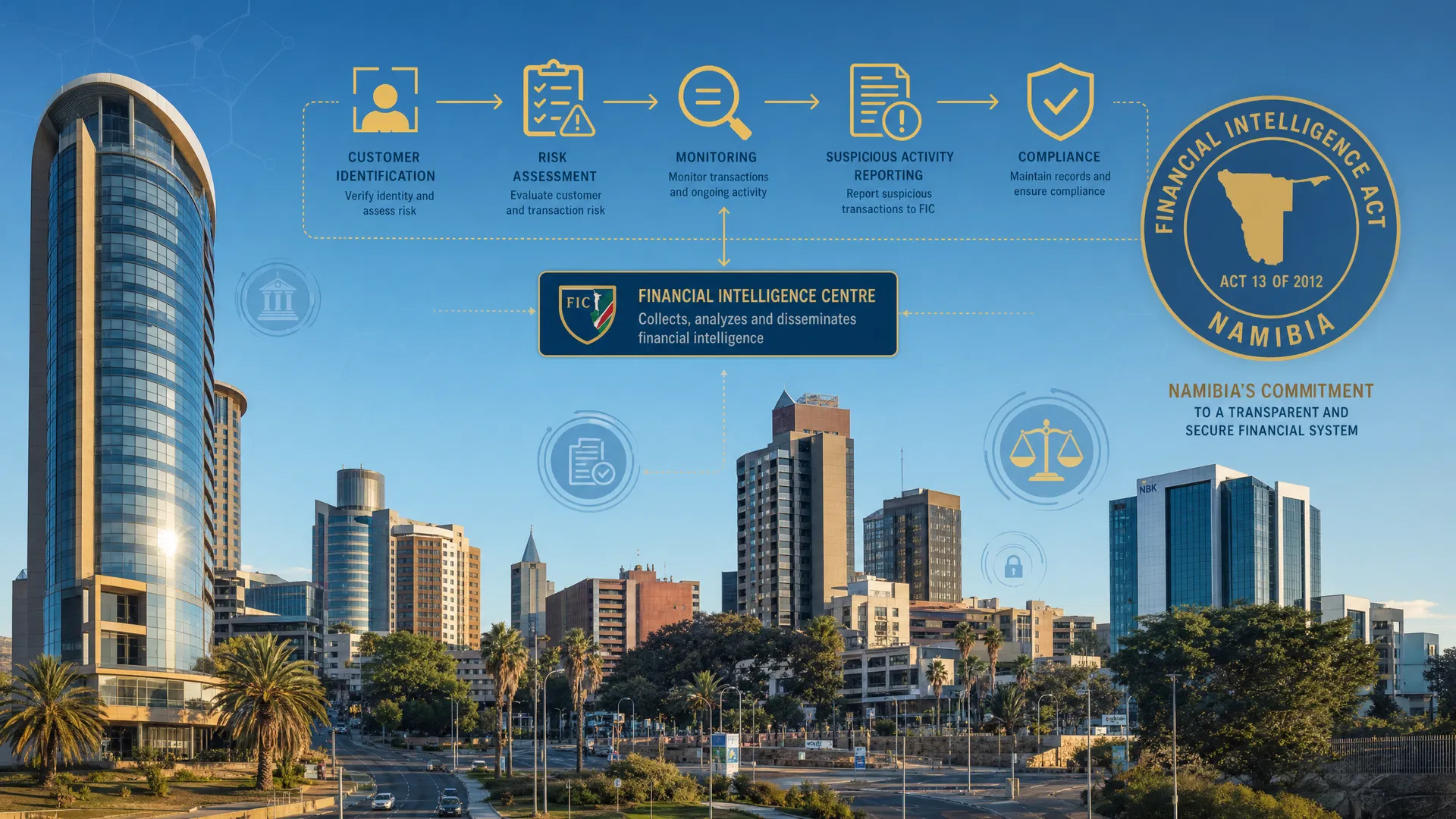
Namibia's approach to digital asset regulation is characterized by a proactive commitment to financial integrity and consumer protection. The cornerstone of this framework is the Financial Intelligence Act (FIA), which established the Financial Intelligence Centre (FIC) as the national agency responsible for combating money laundering, terrorism financing, and proliferation financing. The FIC's mandate is to protect the integrity of the Namibian financial system against these risks, driving compliance and supporting law enforcement.
Recognizing the unique challenges and opportunities presented by digital assets, Namibia enacted the Virtual Assets Act No. 10 of 2023 (VAA), which came into force on July 25, 2023. The VAA represents a forward-thinking piece of legislation designed to provide for the licensing and regulation of Virtual Asset Service Providers (VASPs). The primary objective of the VAA is not merely to regulate the assets themselves, but to establish a comprehensive framework for the entities that facilitate their exchange, transfer, and safekeeping. By designating the Bank of Namibia as the Regulatory Authority, the VAA ensures that the digital asset ecosystem operates under stringent oversight, aligning with the standards set by the Financial Action Task Force (FATF).
Key Provisions of the Virtual Assets Act 2023
The VAA introduces a meticulous licensing framework, categorizing VASPs based on the specific services they provide. This nuanced approach ensures that regulatory requirements are tailored to the risk profile of each activity. The Act defines a "Virtual Asset Service Provider" as any person that, by way of business, provides virtual asset services for or on behalf of another person.
The licensing categories under the VAA include:
- Token Issuers: Entities involved in Initial Token Offerings (ITOs), required to adhere to strict transparency and disclosure standards.
- Class "M" License (Broker-Dealers): Intermediaries facilitating the exchange between virtual assets and fiat currencies, or between different virtual assets.
- Class "S" License (Marketplaces): Platforms operating as virtual asset exchanges, providing liquidity and price discovery.
- Class "O" License (Wallet Services): Entities offering platforms for storing, administering, and exchanging virtual assets.
- Class "R" License (Custodians): Service providers responsible for the safekeeping and administration of virtual assets, employing sophisticated security measures.
- Class "I" License (Advisory Services): Entities providing specialized financial advice related to token issuance and sales.
Crucially, the VAA explicitly defines "virtual assets" as digital representations of value that can be digitally transferred, stored, or traded, utilizing distributed ledger technology (DLT), and capable of being used for payment or investment purposes. This definition aligns with regional standards while explicitly excluding fiat currencies and regulated securities.
AML/CFT Compliance Implications for Digital Platforms
A central pillar of Namibia's regulatory framework is the classification of VASPs as accountable institutions under the Financial Intelligence Act. This classification imposes rigorous AML/CFT compliance obligations on all licensed digital platforms operating within or from Namibia.
VASPs are required to implement comprehensive compliance programs that include robust Customer Due Diligence (CDD) and Know Your Customer (KYC) procedures. This involves verifying the identity of clients, understanding the nature of their business, and continuously monitoring transactions for suspicious activity. The Bank of Namibia, in conjunction with the FIC, has issued specific directives, such as the "Directive to Banks on VASPs" (September 2023), which mandates that financial institutions update their risk assessments regarding entities that may be operating as unregistered VASPs.
Furthermore, the VAA and the FIA require VASPs to maintain detailed records of transactions and to report any suspicious or unusual transactions to the FIC promptly. The implementation of the "Travel Rule," as recommended by the FATF, is also a critical component, requiring VASPs to obtain, hold, and transmit required originator and beneficiary information immediately and securely when conducting virtual asset transfers.
Enforcement Mechanisms and Regulatory Oversight
The enforcement of the VAA and the FIA is characterized by a collaborative approach between the Bank of Namibia and the Financial Intelligence Centre. The Bank of Namibia, as the Regulatory Authority, is responsible for the licensing, supervision, and prudential regulation of VASPs. It has the authority to conduct inspections, demand information, and impose sanctions for non-compliance, including the suspension or revocation of licenses.
The FIC, acting as the supervisory authority for AML/CFT matters, monitors compliance with the FIA. It utilizes integrated reporting tools, such as the goAML system, to streamline the submission and analysis of Suspicious Transaction Reports (STRs). The FIC has the power to issue directives, impose administrative fines, and refer cases to law enforcement agencies for criminal prosecution.
A key element of the enforcement regime is the "fit and proper" requirement. The Bank of Namibia's "Fit and Proper Person Guidelines" stipulate that all officers, beneficial owners, and associates of a VASP must demonstrate honesty, integrity, diligence, and good character on an ongoing basis. This ensures that only individuals with a proven track record of ethical conduct are permitted to operate within the digital asset ecosystem.
Preparing for the Future: Strategic Imperatives for Digital Platforms
For digital asset platforms like AfriVest, navigating Namibia's regulatory landscape requires a proactive and strategic approach. Compliance must be viewed not merely as a regulatory burden, but as a foundational element of operational resilience and market trust.
Platforms must invest in advanced compliance technologies, including automated KYC/AML screening tools, transaction monitoring systems, and secure data storage solutions that comply with regional data protection laws such as South Africa's POPIA and the Malabo Convention. Establishing a strong compliance culture, supported by regular training and independent audits, is essential.
Furthermore, platforms should actively engage with regulatory authorities, participating in industry consultations and contributing to the development of best practices. By demonstrating a commitment to transparency, security, and financial integrity, digital asset platforms can position themselves as trusted partners in Africa's digital economy transformation.
Conclusion: Driving Africa's Digital Economy Transformation
Namibia's Virtual Assets Act and its integration with the Financial Intelligence Act represent a significant milestone in the regulation of digital assets in Southern Africa. By establishing a clear, comprehensive, and risk-based framework, Namibia is fostering an environment that balances innovation with the imperative of financial stability and integrity.
As Africa continues to embrace digital transformation, the harmonization of regulatory frameworks across the continent will be crucial. Namibia's approach, aligned with international standards such as those of the FATF and the FSB, provides a valuable model for other jurisdictions. For platforms like AfriVest, building sovereign digital asset infrastructure requires a deep understanding of these regulatory nuances. By prioritizing AML/CFT compliance and embracing robust regulatory standards, digital platforms can play a pivotal role in unlocking the full potential of Africa's digital economy, driving financial inclusion, and facilitating secure, efficient cross-border transactions.