# Mauritius as Africa's Fintech Regulatory Sandbox Hub: Lessons for the Continent
The rapid evolution of digital assets and financial technology across Africa presents a dual challenge for regulators: fostering innovation while safeguarding financial stability and consumer protection. As the continent seeks to harmonize its digital economy frameworks, Mauritius has emerged as a pioneering jurisdiction, offering a compelling model through its comprehensive regulatory sandbox and virtual asset legislation. For institutional investors, policymakers, and fintech operators—particularly those building sovereign digital asset infrastructure like AfriVest—the Mauritian approach provides critical insights into balancing regulatory rigor with technological advancement.
The Regulatory Background: Establishing a Controlled Environment
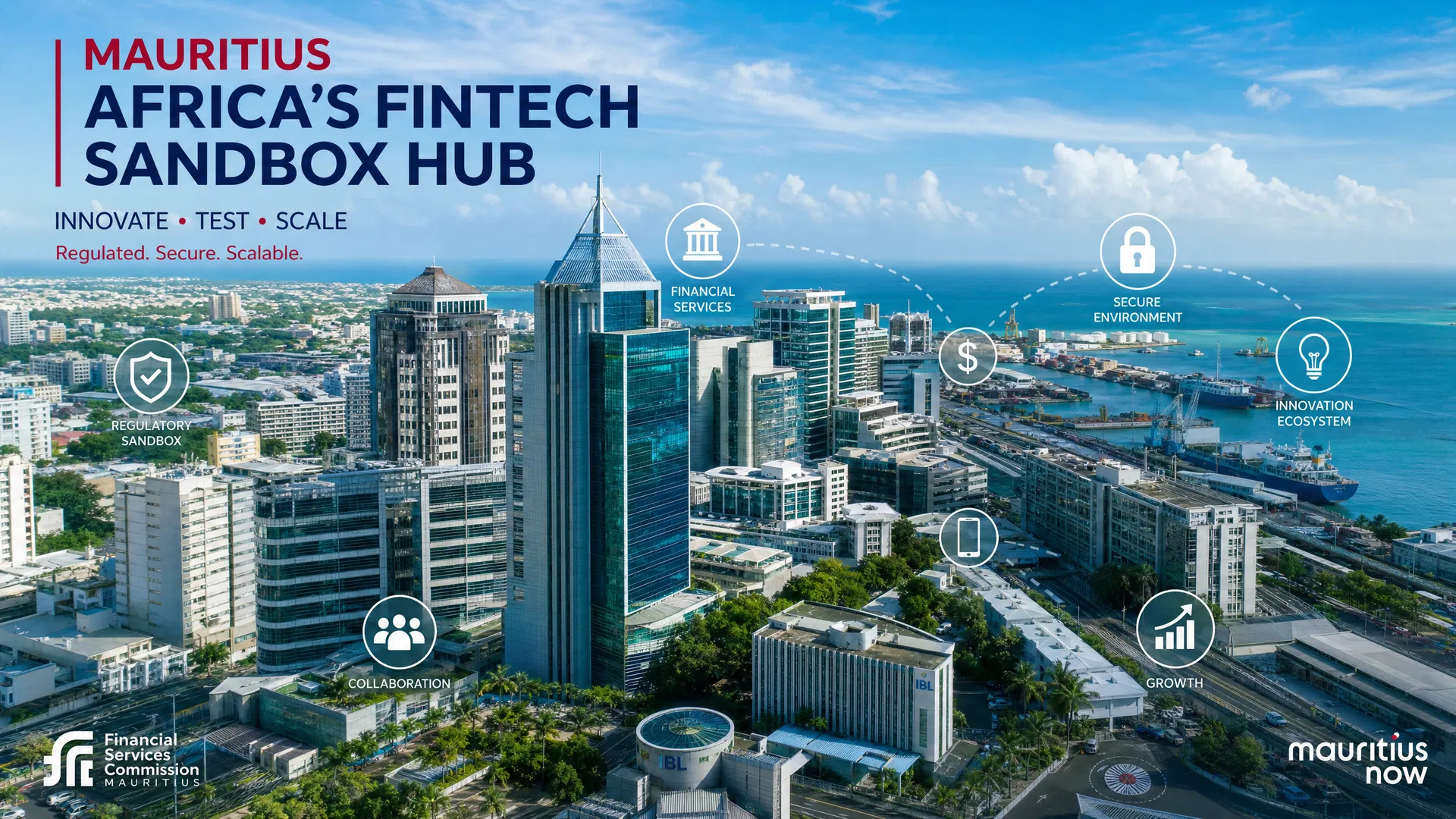
Mauritius introduced its Regulatory Sandbox Licence (RSL) regime through the National Budget 2018/2019, positioning the island nation as a forward-thinking financial center and an international hub for blockchain startups. The framework was designed to accommodate innovative projects for which there was either no legal framework or a lack of adequate legislative provisions. The Economic Development Board (EDB) initially managed the RSL applications, supported by a National Regulatory Sandbox Licence Committee.
In a significant evolution of this framework, the Financial Services Commission (FSC) of Mauritius launched its Fintech and Innovation webpage in November 2023 and updated its Regulatory Sandbox Guidelines. This transition marked a maturation of the ecosystem, bringing fintech innovations under the direct purview of the primary non-banking financial regulator. The FSC's approach is characterized by a structured lifecycle for sandbox entities, emphasizing clear entry criteria, controlled testing environments, and defined exit strategies.
Key Provisions of the Mauritian Sandbox Framework
The FSC's Regulatory Sandbox Guidelines establish rigorous eligibility criteria that applicants must satisfy. A project must be genuinely innovative, adding significant value to existing financial services in the non-banking sector. Furthermore, applicants must demonstrate testing readiness, including adequate resources, developed testing plans with clear objectives, and sound risk management systems to contain any consequences of failure.
Once admitted, a sandbox entity (SE) is granted a regulatory sandbox authorisation (RSA) for a maximum of 12 months, with the possibility of extension. During this period, the SE operates under a set of continuing obligations. These include obtaining prior FSC approval for material changes, submitting interim and final reports on key performance indicators and operational incidents, and ensuring transparent disclosures to users regarding the experimental nature of the product. Crucially, the framework mandates the implementation of adequate complaints handling processes, data protection policies, and confidentiality measures, aligning with regional standards such as the Malabo Convention and various national Data Protection Acts (DPAs) across Africa.
The VAITOS Act: Transitioning from Sandbox to Comprehensive Regulation
The success of the regulatory sandbox paved the way for more permanent legislative structures. In February 2022, the Virtual Asset and Initial Token Offering Services (VAITOS) Act 2021 came into force, establishing a comprehensive regulatory framework for cryptocurrency and digital asset businesses. The VAITOS Act represents a critical transition from experimental sandbox testing to full regulatory integration.
The Act defines virtual assets and establishes five distinct classes of Virtual Asset Service Provider (VASP) licenses:
- Class M: Virtual Asset Broker-Dealer
- Class O: Virtual Asset Wallet Services
- Class R: Virtual Asset Custodian
- Class I: Virtual Asset Advisory Services
- Class S: Virtual Asset Marketplace
Each class carries specific capital requirements, ranging from MUR 2 million for broker-dealers to MUR 6.5 million for marketplaces. This tiered approach ensures that regulatory burdens are proportionate to the risks associated with different types of virtual asset activities. Furthermore, the FSC has issued specific licensing criteria covering minimum capital, client disclosure, custody of client assets, cybersecurity, and risk management, ensuring alignment with international standards such as those set by the Financial Action Task Force (FATF) and the International Organization of Securities Commissions (IOSCO).
Compliance Implications and Enforcement Mechanisms
For digital asset platforms operating in or from Mauritius, compliance is not merely a box-ticking exercise but a fundamental operational requirement. The VAITOS Act and the sandbox guidelines impose stringent Anti-Money Laundering and Combating the Financing of Terrorism (AML/CFT) obligations. VASPs must maintain physical offices in Mauritius, appoint resident directors and compliance officers, and implement robust transaction monitoring systems, including adherence to the FATF Travel Rule.
Enforcement mechanisms are robust. The FSC and the EDB retain the authority to revoke or suspend an RSA if a licensee fails to commence operations within three months, breaches licensing conditions, conducts business in an unsound manner, or fails to ensure adequate risk control. Recent updates in 2024 further clarified that staking services, decentralized autonomous organizations (DAOs), and stablecoin issuers must adhere to specific regulatory requirements, including maintaining 1:1 fiat reserves in separate Mauritian bank accounts with quarterly independent audits.
Preparing for the Future: Lessons for Digital Asset Platforms
For platforms like AfriVest, which are building sovereign digital asset infrastructure encompassing tokenization, CBDC infrastructure, and digital identity, the Mauritian model offers several strategic lessons. First, proactive engagement with regulators through sandbox environments can facilitate the development of compliant, innovative products. Second, a modular approach to licensing, as seen in the VAITOS Act, allows platforms to scale their regulatory footprint in tandem with their operational expansion.
Furthermore, alignment with international standards (ISO 20022, FSB, OECD) and regional data protection laws (POPIA, NDPA, DPA Kenya, DPA Ghana, PDPA Rwanda, DPA Uganda, DPA Zimbabwe) is essential. The Mauritian framework's emphasis on cybersecurity, data protection, and transparent client disclosures underscores the necessity of building these capabilities into the core architecture of digital asset platforms.
Conclusion: Driving Africa's Digital Economy Transformation
Mauritius has successfully demonstrated that a well-structured regulatory sandbox can serve as a catalyst for comprehensive, internationally aligned digital asset legislation. By providing a controlled environment for innovation and subsequently enacting the VAITOS Act, Mauritius has established itself as a leading fintech hub in Africa. For the broader continent, the Mauritian experience underscores the importance of agile regulatory frameworks that can adapt to technological advancements while ensuring market integrity and consumer protection. As Africa continues its digital economy transformation, the lessons from Mauritius will be invaluable in shaping a harmonized, resilient, and inclusive financial ecosystem.