Lake Victoria, the world’s largest tropical lake and the second-largest freshwater body globally, stands as a cornerstone of East Africa’s economic and ecological vitality. Shared by Kenya, Uganda, and Tanzania, the lake supports the largest freshwater fishery in the world, producing approximately one million tons of fish annually. This vibrant ecosystem sustains the livelihoods of over four million people and employs roughly 200,000 individuals directly in fishing and aquaculture. However, the basin faces unprecedented challenges. Overfishing, habitat degradation, pollution, and the introduction of invasive species have severely depleted fish stocks, threatening both regional food security and economic stability. As the demand for sustainable aquatic food systems intensifies, the integration of advanced digital infrastructure, particularly blockchain technology and asset tokenization, emerges as a transformative solution for Lake Victoria’s aquaculture sector.
The traditional fisheries management in Lake Victoria has long been plagued by opacity, fragmented data, and a lack of verifiable traceability. Smallholder fishers and aquaculture operators often operate in trust-based systems with limited access to formal financial services or premium markets. This invisibility not only stifles economic growth but also hampers efforts to enforce sustainable fishing practices. The depletion of critical species, such as the native cichlids, and the dominance of the introduced Nile Perch highlight the urgent need for a paradigm shift. To preserve this vital resource, stakeholders must transition from extractive practices to regenerative aquaculture, supported by robust, transparent, and immutable data systems.
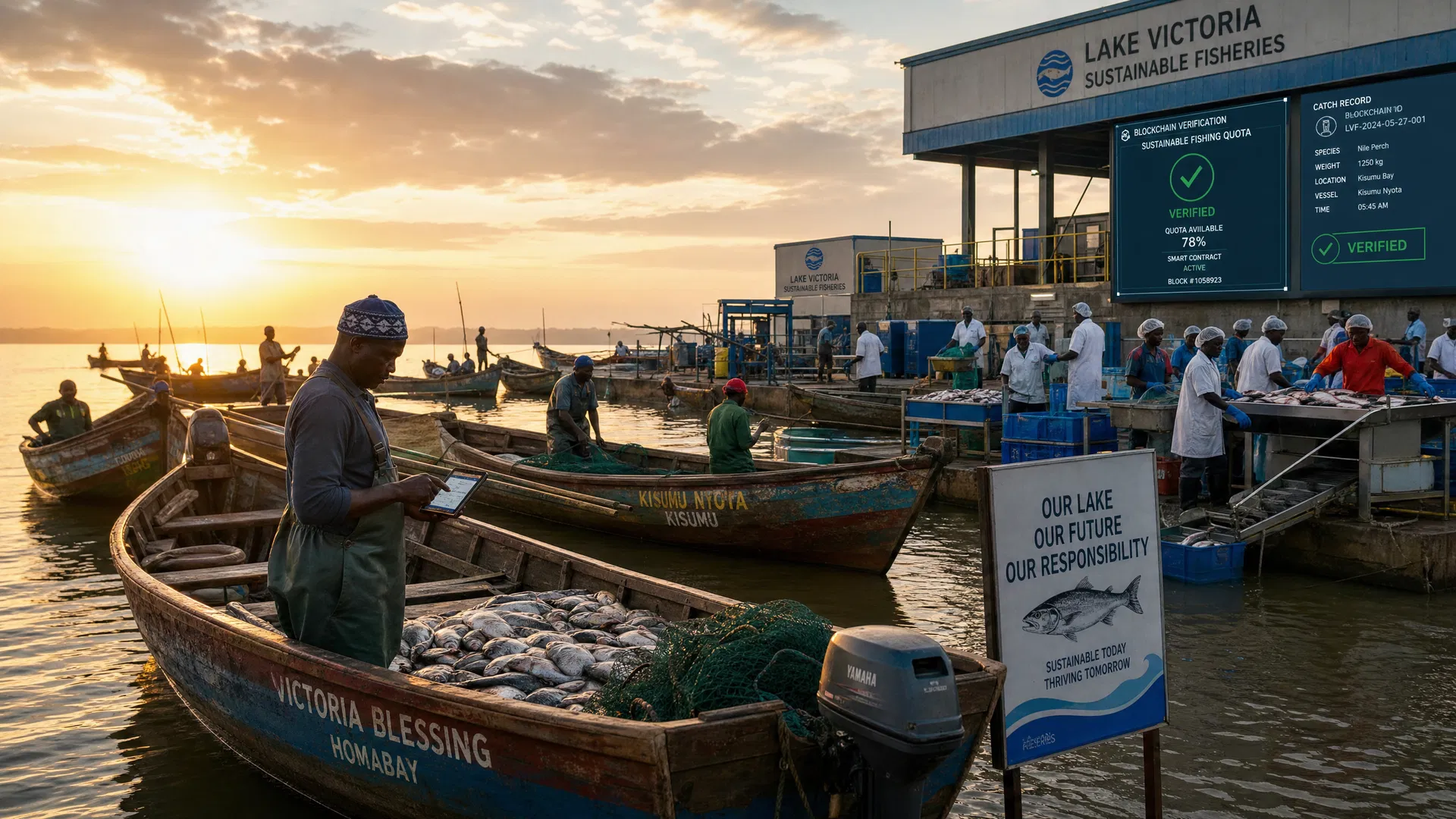
Blockchain technology offers a compelling framework to address these systemic vulnerabilities. By establishing a decentralized and tamper-proof ledger, blockchain provides a new trust layer for the aquaculture supply chain. Every critical tracking event—from the sourcing of fingerlings and feed to water quality monitoring and final harvest—can be securely recorded and verified. This digital traceability ensures that fish products originating from Lake Victoria meet stringent international sustainability standards, such as the European Union’s impending regulations on verified traceability. For African exporters, compliance is not merely a regulatory hurdle; it is an economic imperative. Currently, a significant portion of African agricultural and aquatic exports face compliance challenges, resulting in substantial revenue losses. Blockchain mitigates this risk by providing irrefutable proof of sustainable practices.
Furthermore, the tokenization of aquaculture assets presents a groundbreaking opportunity to democratize access to capital and incentivize regenerative practices. In the context of Lake Victoria, asset tokenization can transform physical aquaculture infrastructure—such as fish cages, hatcheries, and processing facilities—into digital tokens that can be traded or used as collateral. This financial innovation bridges the gap between local operators and global investors, unlocking much-needed liquidity for the sector. By tokenizing verified carbon credits generated through sustainable aquaculture, such as the restoration of native aquatic habitats or the implementation of energy-efficient processing methods, fishers can access new revenue streams. This dual approach not only rewards environmental stewardship but also enhances the economic resilience of lakeside communities.
The implementation of digital infrastructure in Lake Victoria’s fisheries also addresses the critical issue of data asymmetry. Platforms leveraging blockchain can aggregate anonymized data on water quality, disease outbreaks, and yield metrics, providing policymakers and researchers with actionable insights. This data-driven approach enables adaptive management strategies, allowing authorities like the Lake Victoria Fisheries Organization (LVFO) to respond proactively to ecological shifts and enforce quotas more effectively. Moreover, by integrating mobile technology, these platforms can empower fishers with real-time market information, weather forecasts, and best practices, fostering a more informed and resilient workforce.
The socio-economic implications of digitizing Lake Victoria’s aquaculture are profound. In regions where resource scarcity has historically fueled inter-community tensions and cross-border disputes, transparent and equitable resource management is essential for regional stability. Blockchain’s immutable records can help resolve conflicts over fishing rights and territorial boundaries by providing a shared, objective source of truth. Additionally, by ensuring that premium prices for sustainably sourced fish reach the primary producers, digital platforms can alleviate poverty and reduce the appeal of illicit activities. This equitable distribution of value is particularly crucial for empowering women, who play a significant role in the post-harvest processing and trading of fish in the basin.
As Africa navigates the complexities of climate change and population growth, the modernization of its agricultural and aquatic food systems is non-negotiable. The integration of blockchain and tokenization in Lake Victoria’s fisheries exemplifies the potential of digital infrastructure to harmonize economic development with ecological preservation. By turning sustainability into a verifiable and monetizable asset, these technologies align the interests of local fishers, global consumers, and environmental advocates.
AfriVest recognizes that the future of Africa’s economy lies at the intersection of natural capital and digital innovation. As a pioneer in digital infrastructure and asset tokenization, AfriVest is committed to building the platforms that will power this regenerative renaissance. By providing the technological foundation for transparent supply chains and inclusive financial ecosystems, AfriVest envisions a future where Lake Victoria’s fisheries not only survive but thrive, setting a global standard for sustainable aquaculture and cooperative governance.