Africa’s mining sector has long been the backbone of the continent’s economic growth, supplying the world with critical minerals essential for everything from smartphones to electric vehicles. However, this wealth extraction has historically come at a significant environmental cost. Deforestation, water contamination, and soil degradation have frequently plagued mining communities, leading to a breakdown in trust between operators, regulators, and local populations. As the global demand for transition minerals surges, the need for sustainable and accountable mining practices has never been more urgent. At AfriVest, we believe that the solution lies in the convergence of advanced digital infrastructure, specifically the Internet of Things (IoT) and blockchain technology, to create a new paradigm of environmental accountability in Africa’s mining industry.
The traditional approach to environmental monitoring in mining has often been reactive, fragmented, and susceptible to manipulation. Manual sampling of water quality, periodic air pollution checks, and self-reported compliance data have proven inadequate in preventing ecological disasters or ensuring long-term sustainability. This opacity not only harms the environment but also deters responsible investment and alienates local communities. To build a resilient and equitable digital economy, Africa must transition from analog oversight to real-time, immutable environmental monitoring. This is where the integration of IoT sensors and blockchain networks becomes transformative.
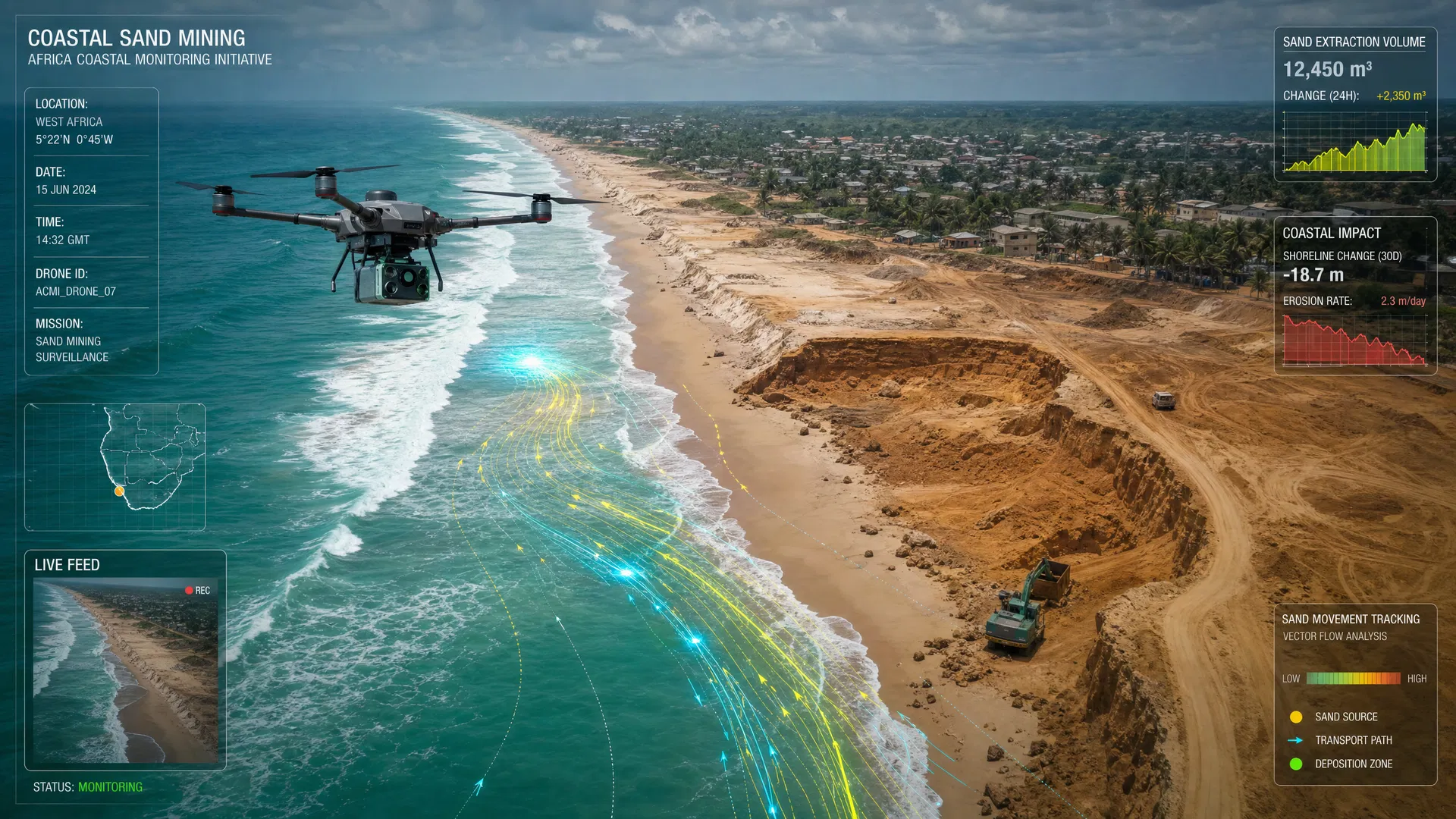
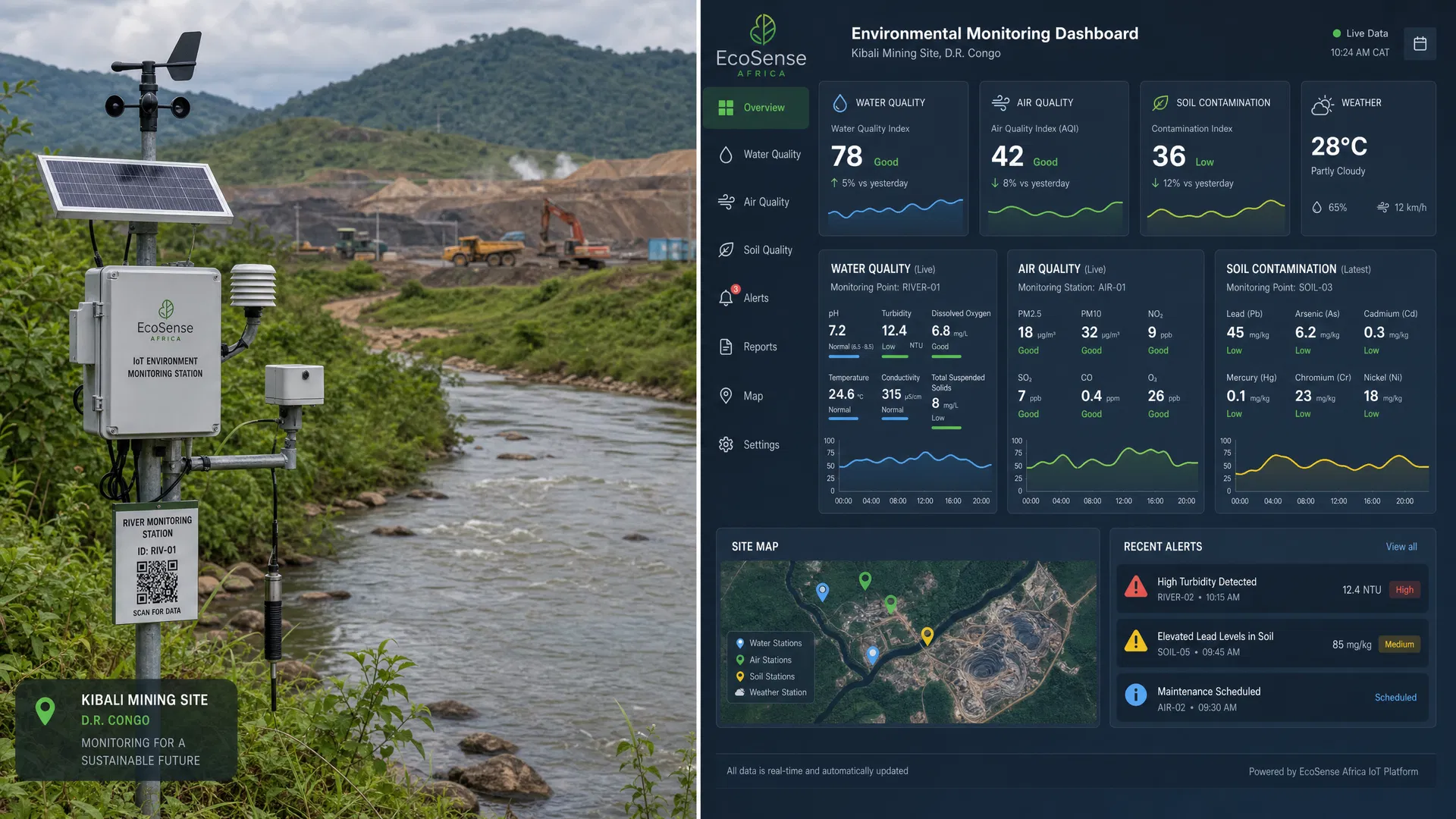
The Internet of Things provides the sensory network required for continuous, granular environmental oversight. By deploying networks of connected sensors across mining sites, operators and regulators can monitor critical ecological indicators in real time. For instance, IoT devices can continuously measure the pH levels and heavy metal concentrations in nearby water sources, track particulate matter and toxic gas emissions in the air, and monitor soil stability to predict and prevent landslides or tailings dam failures. In countries like the Democratic Republic of Congo and South Africa, where mining operations are vast and often located in ecologically sensitive areas, these sensors act as an unblinking eye, capturing environmental data with unprecedented accuracy and frequency.
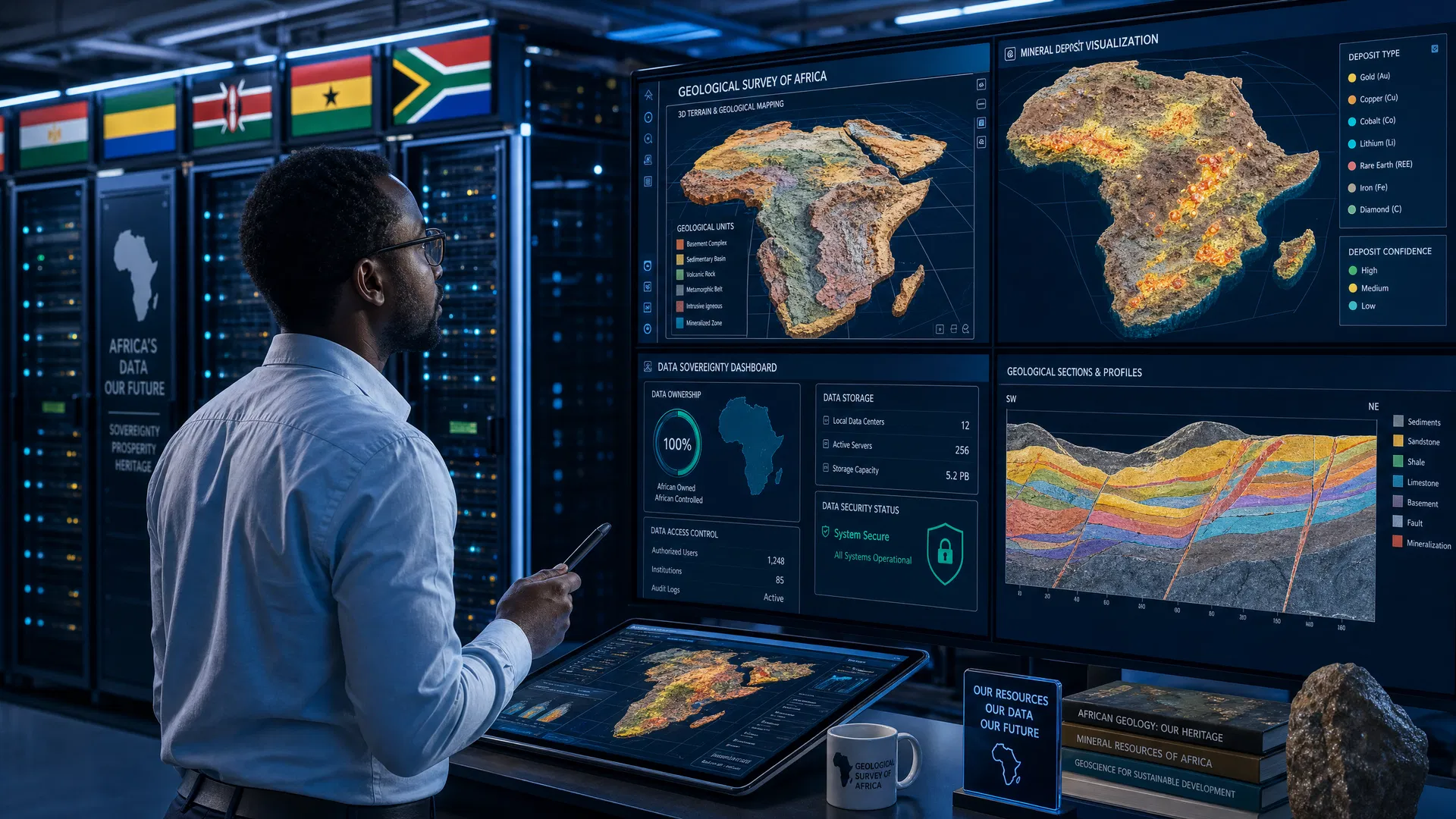
However, collecting data is only half the battle; ensuring its integrity and accessibility is equally crucial. This is the role of blockchain technology. When IoT sensors capture environmental data, it can be automatically encrypted and recorded onto a decentralized blockchain ledger. Because blockchain is immutable, once the data is logged, it cannot be altered, deleted, or tampered with by any single party. This creates a single, verifiable source of truth regarding a mine’s environmental impact. Regulators, investors, and community stakeholders can access this transparent ledger to verify compliance with environmental standards, eliminating the reliance on self-reported and potentially biased data.
The synergy between IoT and blockchain fosters a proactive approach to environmental management. Smart contracts—self-executing code on the blockchain—can be programmed to trigger automatic alerts or actions when environmental thresholds are breached. For example, if an IoT sensor detects that water toxicity levels have exceeded permissible limits, a smart contract could instantly notify regulatory authorities, halt specific mining operations, and automatically disburse compensation to affected communities from a pre-funded escrow account. This level of automated accountability ensures that environmental breaches are addressed immediately, mitigating long-term damage and enforcing strict adherence to sustainability protocols.
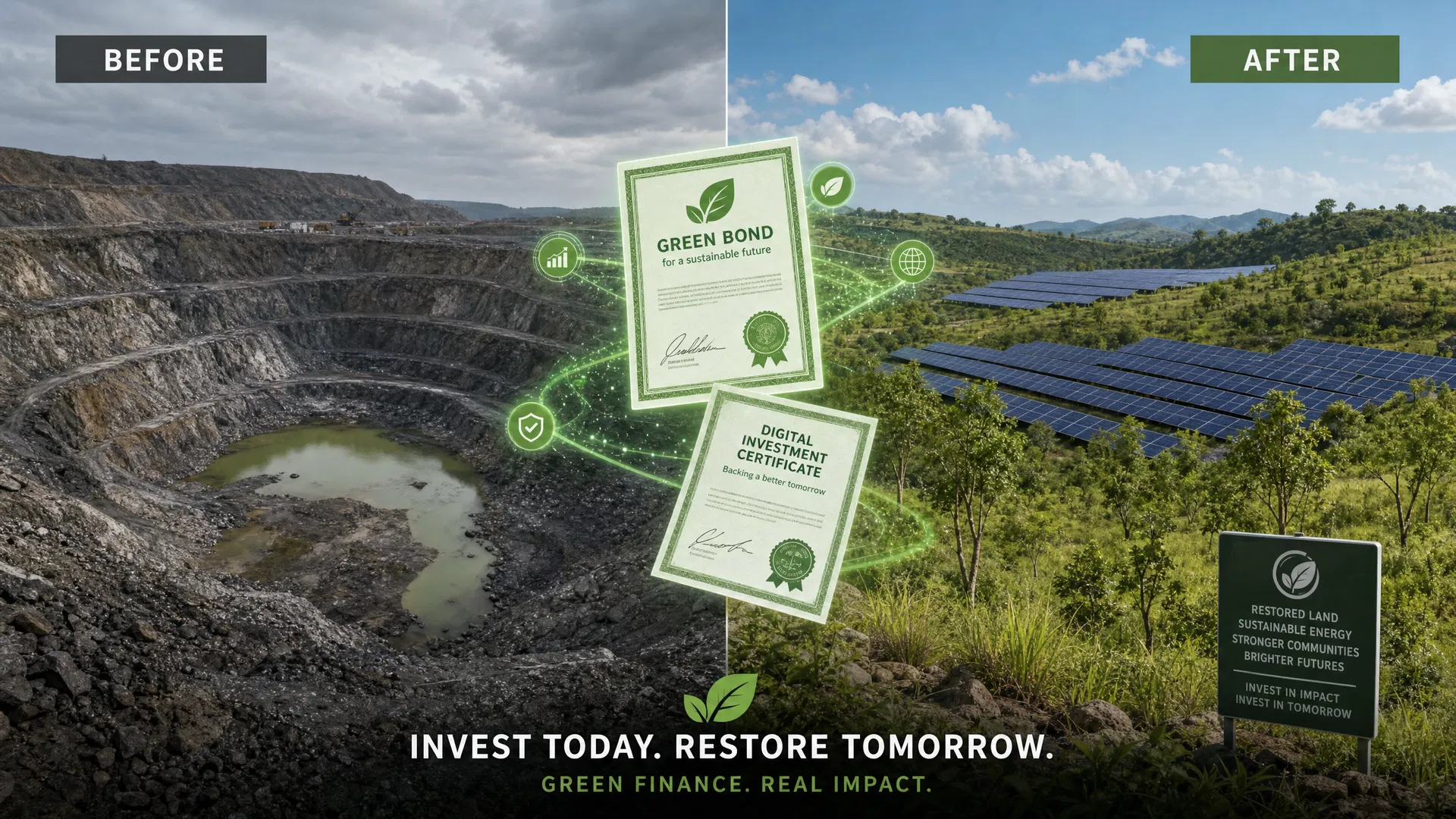
Furthermore, this digital infrastructure is a catalyst for asset tokenization and cooperative governance, core pillars of AfriVest’s mission. By tokenizing mining assets, we can embed environmental compliance directly into the value of the asset. Investors increasingly demand Environmental, Social, and Governance (ESG) accountability. A tokenized mining project that transparently proves its environmental stewardship through IoT and blockchain data becomes significantly more attractive to global capital. It allows for the creation of "green premiums" on responsibly sourced minerals, rewarding operators who prioritize sustainability.
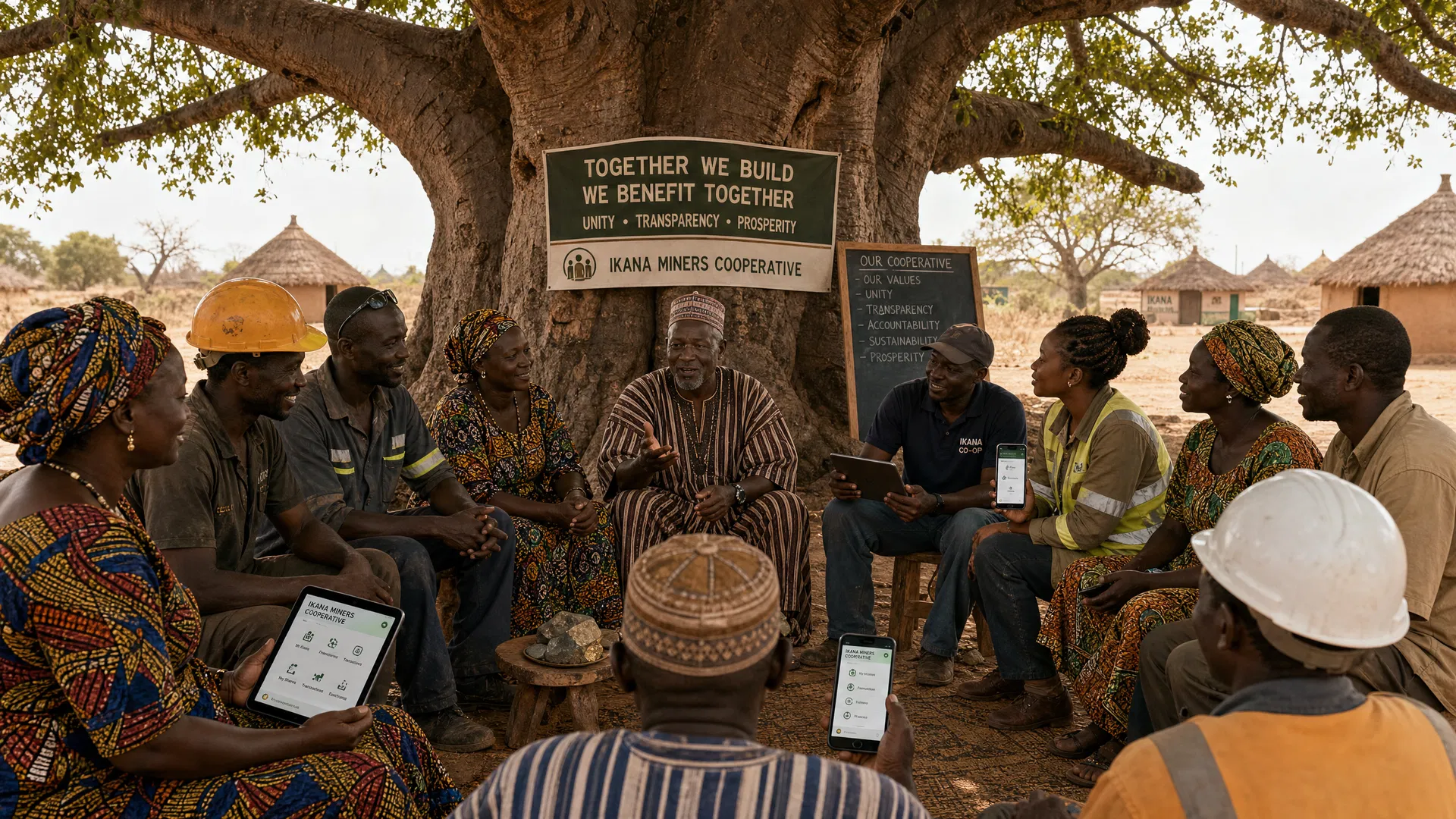
Moreover, this transparent data empowers local communities, enabling cooperative governance models. When communities have access to immutable environmental data, they can actively participate in the oversight of mining operations that affect their livelihoods. This democratizes resource management, shifting the dynamic from exploitation to partnership. Communities can use this data to negotiate fairer terms, ensure that environmental remediation funds are properly allocated, and hold both corporations and governments accountable.
The implementation of such digital infrastructure is not without challenges. It requires significant investment in connectivity, particularly in remote mining regions, and the development of standardized protocols for data interoperability. However, the cost of inaction—measured in ecological devastation and lost economic opportunity—is far greater. Initiatives across the continent are already demonstrating the viability of these technologies, and the momentum is building toward a more transparent and sustainable extractive industry.
At AfriVest, our vision is to accelerate this transformation. We are committed to building the digital infrastructure that underpins Africa’s economic future, ensuring that asset tokenization and financial inclusion are inextricably linked to environmental stewardship. By championing the integration of IoT and blockchain in the mining sector, we are not just digitizing assets; we are digitizing accountability. We envision an Africa where the wealth beneath the soil is extracted in harmony with the environment above it, driving sustainable prosperity for generations to come. Through innovative digital platforms, we can turn the promise of responsible mining into a verifiable reality.