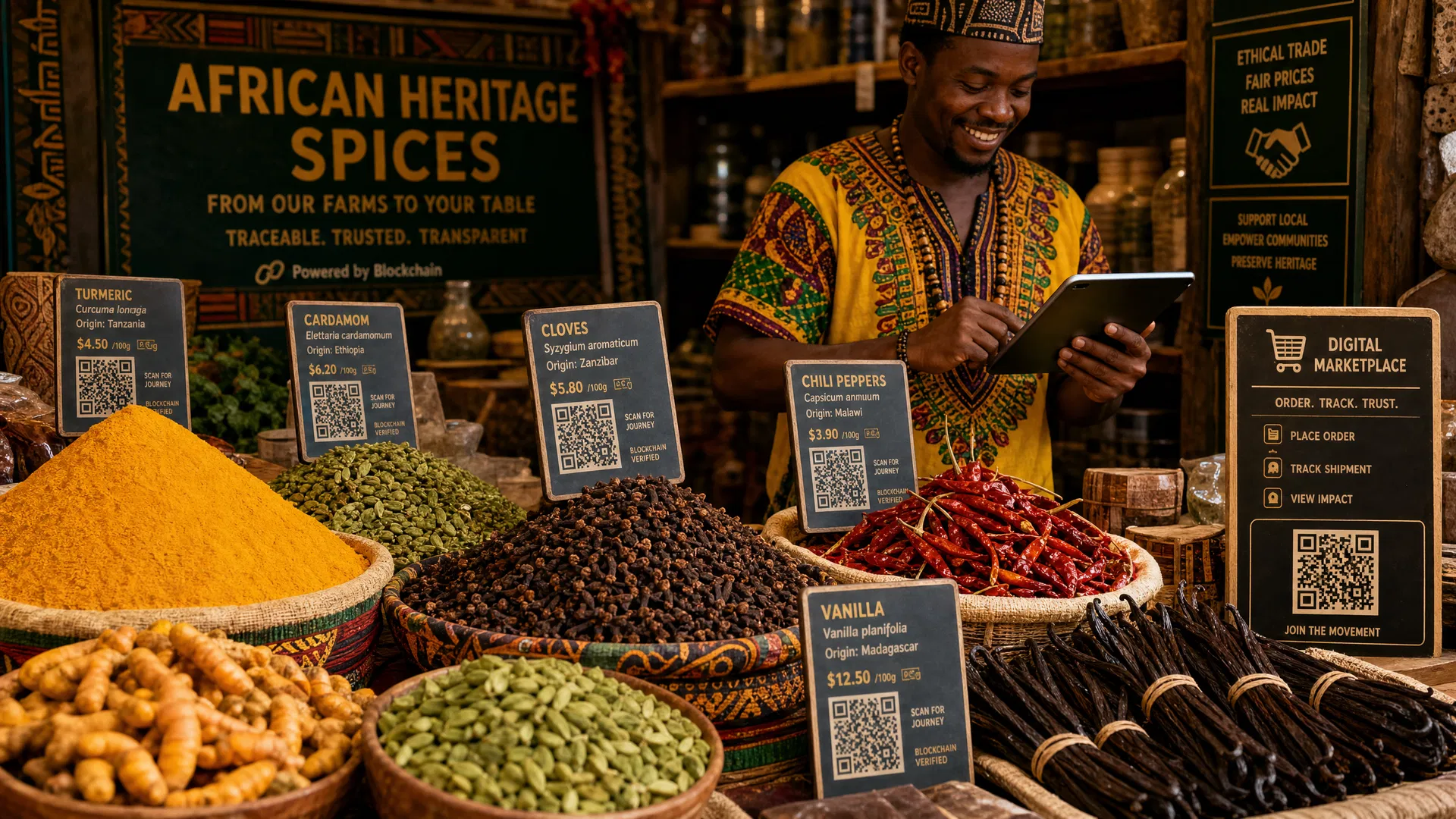
The African spice trade has long been a cornerstone of the continent’s agricultural economy, with countries such as Ethiopia, Tanzania, Madagascar, and Nigeria producing some of the world’s most sought-after spices, including cardamom, cloves, vanilla, and chili peppers. Despite their global appeal and significant contribution to local livelihoods, rural spice producers often face systemic challenges in accessing premium markets, receiving fair compensation, and integrating into global value chains. With the advent of digital marketplaces, underpinned by robust digital infrastructure, blockchain technology, and asset tokenization, there is a transformative opportunity to reshape this narrative—connecting rural producers directly to premium buyers and fostering inclusive economic growth across Africa.
Africa’s spice sector is predominantly informal and fragmented, characterized by smallholder farmers who lack access to transparent pricing, timely market information, and efficient distribution channels. According to the International Trade Centre, small-scale spice farmers in East Africa typically receive only 20-30% of the final retail price, with intermediaries capturing the majority of value. This disconnect not only depresses farmer incomes but also limits the scalability of African spices in high-value export markets. Digital marketplaces, supported by comprehensive digital infrastructure, can bridge these gaps by creating transparent, efficient, and secure platforms where producers and buyers transact directly.
Blockchain technology plays a pivotal role in this transformation. By enabling immutable and transparent record-keeping, blockchain ensures traceability and quality assurance—critical factors for premium buyers increasingly demanding provenance and ethical sourcing. For example, Madagascar’s vanilla farmers, who supply nearly 80% of the world’s natural vanilla, have struggled with quality control and counterfeit products. Implementing blockchain-based certification and traceability systems can authenticate the origin and quality of vanilla beans, enhancing trust and enabling farmers to command premium prices. Furthermore, blockchain facilitates smart contracts, automating payments and reducing delays, thus ensuring smallholders receive immediate and fair compensation.
Tokenization of agricultural assets offers another innovative avenue to unlock value within the spice sector. By digitizing ownership of spice crops or future harvests into tradeable tokens, farmers and cooperatives can access new forms of finance—such as micro-investments or asset-backed lending—without traditional collateral requirements that often exclude rural producers. In Nigeria, where chili pepper production is significant, tokenization could enable farmers to fractionalize their crops and attract investments from diaspora communities or ethical funds seeking to support sustainable agriculture. This democratization of finance not only empowers producers but also strengthens supply chains by providing capital for quality improvements and yield enhancement.
Digital marketplaces also support cooperative governance models, which are instrumental in Africa’s agricultural landscape. Cooperatives, prevalent in regions such as Kenya’s Rift Valley and Tanzania’s Kilimanjaro, aggregate smallholders to improve bargaining power and share resources. AfriVest’s platform integrates cooperative governance tools that enable transparent decision-making and equitable distribution of revenues through blockchain-enabled voting and smart contracts. This fosters trust among members and aligns incentives, enhancing the cooperative’s ability to negotiate better terms with buyers in global spice markets. Moreover, cooperative governance linked with digital marketplaces can facilitate traceability and certification processes collectively, reducing costs and increasing market access.
In practical terms, countries like Ethiopia have begun leveraging digital platforms to enhance agricultural exports. The Ethiopian Commodity Exchange (ECX), for instance, digitizes commodity trading and has improved price discovery mechanisms. However, the ECX’s model primarily serves staple crops and requires further adaptation to support niche, high-value spices. AfriVest envisions expanding such frameworks specifically for spices, incorporating blockchain and tokenization to create a comprehensive digital marketplace where rural spice producers can engage directly with international buyers, bypassing costly intermediaries, and ensuring compliance with international standards.
The impact of digital marketplaces on financial inclusion cannot be overstated. According to the World Bank, approximately 57% of adults in Sub-Saharan Africa remain unbanked, with rural populations disproportionately affected. By integrating decentralized finance (DeFi) protocols into spice marketplaces, producers gain access to digital wallets, credit, and insurance products tailored to their needs. This financial inclusion enhances resilience against climate shocks and market volatility, which are prevalent risks in spice production due to weather dependence and fluctuating global demand. AfriVest’s platform is designed to embed these financial services seamlessly, empowering rural producers to manage risks and invest in productivity.
Looking ahead, the digitization of African spice markets represents a strategic frontier in the continent’s broader economic transformation. By harnessing cutting-edge technologies like blockchain and tokenization within robust digital marketplaces, Africa can unlock the full potential of its rich spice heritage—transforming it from a fragmented, low-margin sector into a transparent, efficient, and inclusive economic engine. AfriVest is at the forefront of this evolution, providing the digital infrastructure that supports cooperative governance, secure asset tokenization, and financial inclusion tailored to the unique realities of African agriculture. Our vision is a future where every rural spice farmer, from the highlands of Ethiopia to the coastal regions of Tanzania, is directly connected to premium global markets, receives equitable value for their produce, and participates fully in Africa’s digital economy. Through collaborative innovation and sustainable digital ecosystems, AfriVest is committed to making this vision a reality, catalyzing a new era of prosperity for Africa’s agricultural communities.