The intersection of agriculture, climate change, and economic development presents one of the most critical opportunities for the African continent today. While Africa holds approximately sixty percent of the world’s uncultivated arable land, its agricultural sector remains highly vulnerable to the escalating impacts of climate change, including erratic rainfall and prolonged droughts. In response to these environmental pressures, agroforestry has emerged as a highly effective, dual-purpose solution. By deliberately integrating trees and shrubs into crop and animal farming systems, agroforestry not only enhances food security and restores degraded ecosystems but also serves as a powerful mechanism for carbon sequestration. For millions of African smallholder farmers, this ecological practice unlocks a transformative economic opportunity: the ability to monetize sustainable farming through the generation and sale of carbon credits.
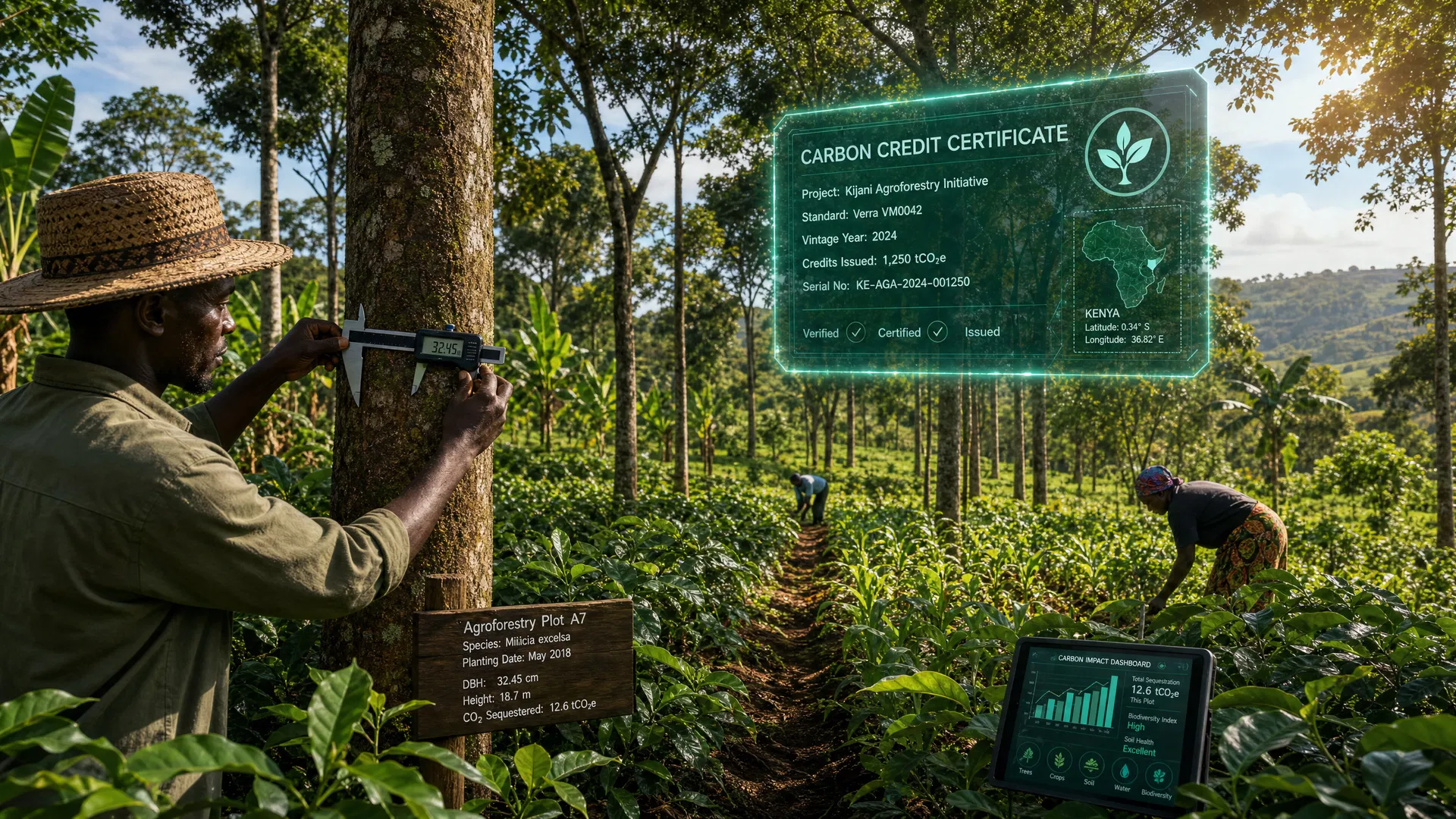
The agronomic and environmental benefits of agroforestry are well-documented and increasingly vital for sustainable development. Integrating tree species with traditional crops improves soil moisture retention, reduces erosion, and fosters biodiversity. For example, pilot projects in Kenya have demonstrated that combining fruit or timber trees with staple crops like maize can significantly increase overall agricultural yields while simultaneously capturing substantial amounts of atmospheric carbon. Data indicates that well-managed agroforestry systems can sequester roughly one ton of carbon per half-hectare annually. When quantified and verified, this sequestered carbon translates into tradable carbon credits. At current market valuations, where high-quality, nature-based carbon credits can command prices ranging from ten to twenty-five dollars per ton, the financial implications for rural farming communities are profound.
Despite this immense potential, the traditional global carbon market has historically marginalized African smallholder farmers. The conventional processes for verifying carbon sequestration and issuing credits are notoriously complex, opaque, and prohibitively expensive. High administrative costs, stringent auditing requirements, and the necessity for large-scale land aggregation create insurmountable barriers to entry for individual farmers or small cooperatives. Consequently, the financial rewards of global carbon offsetting have largely bypassed the grassroots agriculturalists who are actively implementing sustainable land management practices. This systemic exclusion highlights a critical need for innovative frameworks that can aggregate small-scale ecological efforts and connect them directly to international carbon markets.
This is where the deployment of advanced digital infrastructure, specifically blockchain technology and asset tokenization, becomes a revolutionary catalyst. By leveraging distributed ledger technology, the opaque and fragmented carbon market can be transformed into a transparent, efficient, and highly accessible ecosystem. Tokenization allows for the fractionalization of carbon credits, meaning that the carbon sequestered by a single tree or a small plot of land can be accurately quantified, digitized, and represented as a secure digital token. This technological innovation drastically lowers the barriers to entry, enabling smallholder farmers to participate in global markets. Smart contracts can automate the issuance and trading of these tokens, ensuring that the majority of the financial value flows directly to the farmers rather than being absorbed by brokers and administrative overhead.
The practical application of these digital solutions is already beginning to take root across various African regions. In countries such as Nigeria, Ghana, and Rwanda, innovative agritech initiatives are combining satellite imagery, remote sensing, and mobile technology to monitor tree growth and verify carbon sequestration in real-time. This verifiable data is then anchored to a blockchain, creating an immutable record of environmental impact. By digitizing the verification process, these platforms provide international buyers with the transparency and cryptographic proof they require, while simultaneously offering farmers a streamlined pathway to monetization. This digital bridge connects the remote African farm directly to corporate entities seeking to fulfill their environmental, social, and governance commitments.
The monetization of agroforestry practices carries profound socio-economic implications, particularly for women-led agricultural initiatives. Across Sub-Saharan Africa, women constitute a significant portion of the agricultural labor force and are often the primary drivers of community-level farming cooperatives. Providing these women with a reliable, secondary income stream derived from carbon credits enhances their financial resilience against crop failures and market volatility. The capital generated from tokenized carbon sales is frequently reinvested into the local economy, funding the purchase of higher-quality seeds, improving irrigation infrastructure, and supporting educational opportunities for children. Therefore, carbon finance acts as a powerful lever for broader poverty alleviation and gender empowerment within rural communities.
As Africa’s premier digital infrastructure platform for asset tokenization, cooperative governance, and financial inclusion, AfriVest is deeply committed to accelerating this transition. We recognize that the true wealth of the continent lies in its land and the people who cultivate it. By providing the secure, scalable blockchain infrastructure necessary to tokenize agroforestry carbon credits, AfriVest envisions a future where every sustainable action taken by an African farmer is recognized, verified, and financially rewarded. Our mission is to dismantle the barriers of the traditional financial system, empowering farming cooperatives with the digital tools they need to access global capital markets. Through this vision, AfriVest is not merely digitizing assets; we are fundamentally redefining the economics of agriculture, ensuring that the stewards of Africa’s environment are the primary beneficiaries of its sustainable future.