Introduction to Africa's Evolving Data Protection Landscape
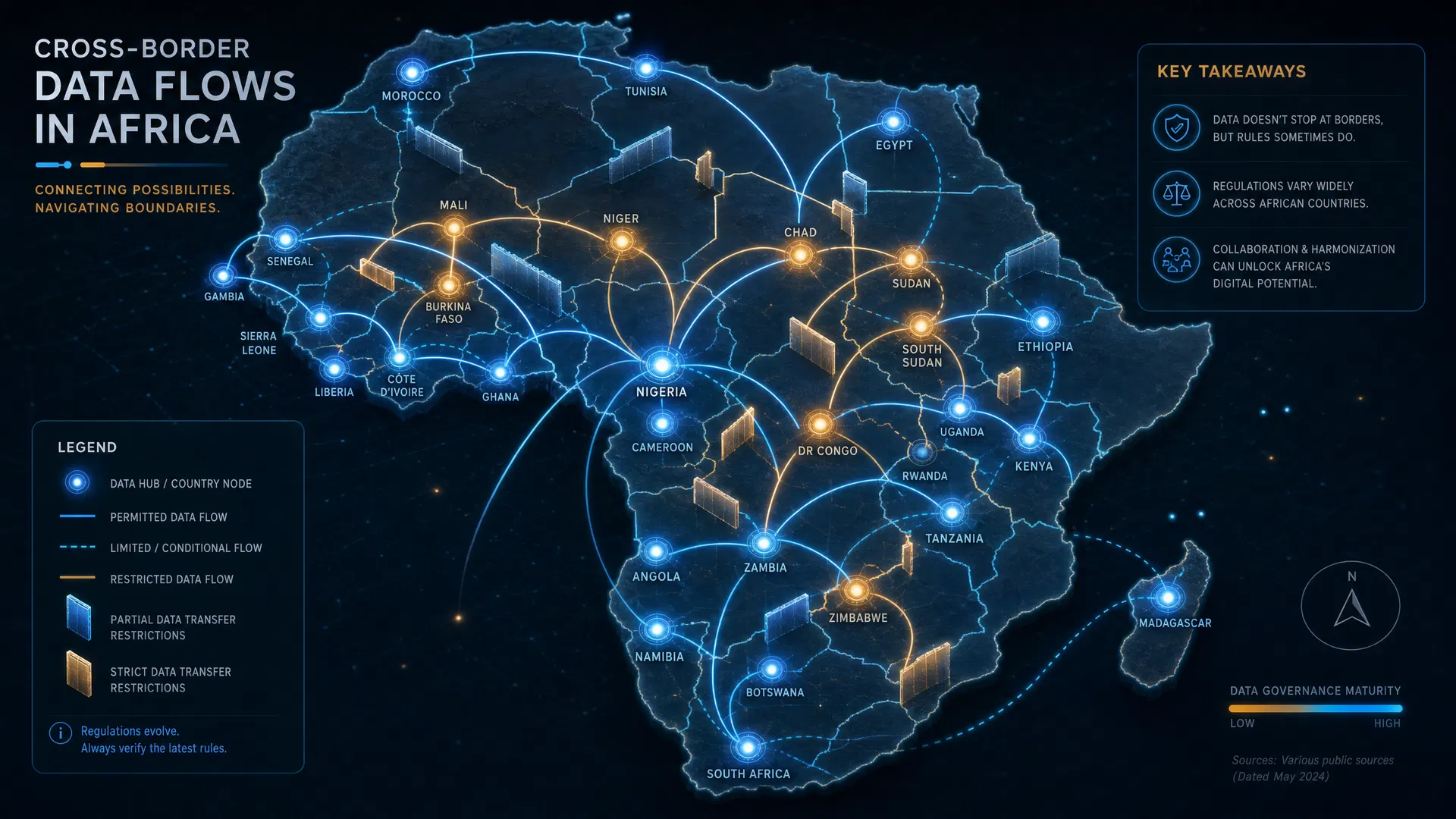
The rapid digitization of Africa's financial ecosystem, driven by the proliferation of digital assets, mobile money, and cross-border payment infrastructure, has precipitated a fundamental shift in the continent's regulatory priorities. As digital asset platforms and fintech operators scale their operations across multiple jurisdictions, the governance of cross-border data transfers has emerged as a critical compliance frontier. The African Union's Malabo Convention on Cyber Security and Personal Data Protection, adopted in 2014, laid the foundational framework for regional harmonization. However, the operational reality remains highly fragmented, with individual nations enacting bespoke data protection laws that impose varying degrees of stringency on the extraterritorial processing of personal information. For institutional investors and operators building sovereign digital asset infrastructure, navigating this complex mosaic of regulations—spanning South Africa's Protection of Personal Information Act (POPIA), Nigeria's Data Protection Act (NDPA), and Kenya's Data Protection Act—is essential for ensuring operational resilience and regulatory alignment.
Key Provisions in Major African Jurisdictions
A comparative analysis of Africa's leading data protection regimes reveals a shared commitment to safeguarding personal data, albeit through divergent mechanisms for cross-border transfers. South Africa's POPIA, fully enforced since July 2021, stipulates under Section 72 that personal information may only be transferred outside the Republic if the recipient is subject to a law, binding corporate rules, or a binding agreement that provides an adequate level of protection. This adequacy requirement mirrors the European Union's General Data Protection Regulation (GDPR) and sets a high benchmark for compliance.
In West Africa, Nigeria's NDPA, enacted in June 2023, introduces a nuanced approach. It permits cross-border transfers if the Nigerian Data Protection Commission (NDPC) determines that the destination country offers adequate protection, or if specific derogations apply, such as explicit consent from the data subject. Similarly, Ghana's Data Protection Act of 2012 requires that data controllers ensure the recipient jurisdiction provides commensurate protection.
East Africa presents another layer of regulatory complexity. Kenya's Data Protection Act of 2019, operationalized through the Data Protection (General) Regulations of 2021, mandates that cross-border transfers are only permissible upon proof of appropriate safeguards or an adequacy decision by the Data Protection Commissioner. Furthermore, Kenya imposes strict data localization requirements for specific categories of data, compelling digital asset platforms to maintain local servers for critical infrastructure. Rwanda's Law No. 058/2021 and Uganda's Data Protection and Privacy Act of 2019 echo these sentiments, emphasizing explicit consent and the necessity of robust contractual safeguards when data traverses national borders.
Compliance Implications for Digital Asset Platforms
For platforms facilitating tokenization, central bank digital currency (CBDC) infrastructure, and stablecoin issuance, the implications of these cross-border data transfer rules are profound. Digital asset transactions inherently involve the seamless flow of sensitive financial and personal data across distributed networks, often spanning multiple jurisdictions simultaneously. The fragmented nature of African data protection laws necessitates a localized yet scalable compliance architecture.
Operators must conduct comprehensive data mapping exercises to identify the geographic flow of personal information, distinguishing between routine operational data and highly sensitive financial records. The reliance on standard contractual clauses (SCCs) or binding corporate rules (BCRs) becomes indispensable for establishing the legal basis for transfers between entities within a corporate group or with third-party service providers. Moreover, the integration of international standards, such as the ISO 20022 messaging standard for financial institutions and the Financial Action Task Force (FATF) travel rule for virtual asset service providers, must be harmonized with regional data localization mandates.
Enforcement Mechanisms and Regulatory Scrutiny
The enforcement landscape across Africa is maturing rapidly, transitioning from a period of legislative enactment to active regulatory oversight. Regulatory bodies, such as South Africa's Information Regulator, Nigeria's NDPC, and Kenya's Office of the Data Protection Commissioner (ODPC), are increasingly asserting their authority through audits, investigations, and the imposition of substantial administrative fines.
In South Africa, non-compliance with POPIA's cross-border transfer provisions can attract administrative fines of up to ZAR 10 million or imprisonment for up to ten years. The Information Regulator has demonstrated a willingness to issue enforcement notices and pursue punitive action against entities that fail to implement adequate safeguards. Similarly, Kenya's ODPC has escalated its enforcement activities, levying penalties against organizations that contravene data processing principles, thereby signaling a zero-tolerance approach to data breaches and unauthorized cross-border transfers. For digital asset platforms, the reputational and financial risks associated with non-compliance are severe, necessitating proactive engagement with regulators.
Strategic Preparation for Infrastructure Operators
To thrive in Africa's dynamic regulatory environment, digital asset platforms must adopt a privacy-by-design approach, embedding data protection principles into the core architecture of their technological infrastructure. This involves deploying advanced cryptographic techniques, such as zero-knowledge proofs and secure multi-party computation, to facilitate cross-border transactions without exposing underlying personal data. Such privacy-enhancing technologies align with the objectives of both regional data protection laws and international frameworks like the International Organization of Securities Commissions (IOSCO) and the Financial Stability Board (FSB).
Furthermore, operators should prioritize the establishment of localized data centers in key jurisdictions to comply with data residency requirements while maintaining the interoperability necessary for pan-African operations. Engaging in industry consortia and public-private partnerships can also facilitate the development of standardized compliance frameworks, reducing the friction associated with navigating disparate national laws.
Conclusion: Shaping Africa's Digital Economy Transformation
The governance of cross-border data transfers is not merely a compliance hurdle; it is a foundational pillar of Africa's digital economy transformation. As the continent accelerates toward greater financial inclusion and the widespread adoption of sovereign digital asset infrastructure, the harmonization of data protection regulations will be critical for unlocking the full potential of cross-border trade and investment. Digital asset platforms that successfully navigate this complex regulatory landscape will not only mitigate compliance risks but also position themselves as trusted custodians of Africa's digital future. By championing robust data protection standards and fostering interoperability across jurisdictions, these operators will play a pivotal role in integrating Africa into the global digital economy, driving sustainable growth and innovation for decades to come.