# Côte d'Ivoire's Digital Economy Regulatory Framework and Fintech Governance
Côte d'Ivoire is rapidly emerging as a pivotal hub for digital innovation and financial technology in West Africa. As the economic powerhouse of the West African Economic and Monetary Union (WAEMU), the country is undertaking strategic steps to enhance its digital economy and position itself as a regional leader in digital trade and financial inclusion. For institutional investors, policymakers, and fintech operators, understanding the nuances of Côte d'Ivoire's regulatory landscape is essential for navigating the complexities of the digital asset ecosystem. This article explores the foundational elements of Côte d'Ivoire's digital economy regulatory framework, focusing on data protection, digital financial services (DFS), and the broader governance of fintech operations.
The Regulatory Background and Institutional Framework
The governance of Côte d'Ivoire's digital economy is characterized by a dual regulatory structure involving both national and regional authorities. At the regional level, the Central Bank of West African States (BCEAO) exercises exclusive authority over the money supply and serves as the primary regulator for financial institutions, payment systems, and digital finance across the WAEMU zone. The BCEAO's mandate includes the authorization and supervision of e-money issuers and payment service providers, ensuring the stability and integrity of the regional financial system.
At the national level, the Telecommunications/ICT Regulatory Authority of Côte d'Ivoire (ARTCI) plays a critical role in overseeing the telecommunications sector, electronic transactions, and data protection. Established as an independent administrative authority, ARTCI is responsible for enforcing compliance with national laws governing the digital economy, including consumer protection and cybersecurity. The interplay between the BCEAO and ARTCI necessitates a coordinated approach to regulation, particularly as the boundaries between telecommunications and financial services increasingly blur in the era of mobile money and digital assets.
Key Provisions in Data Protection and Electronic Transactions
A cornerstone of Côte d'Ivoire's digital regulatory framework is Law No. 2013-450 of June 19, 2013, on the Protection of Personal Data. This comprehensive legislation establishes the legal basis for the collection, processing, and storage of personal data, aligning with regional standards such as the Malabo Convention. The law grants individuals specific rights, including the right to access, rectify, and delete their personal data, while imposing stringent obligations on data controllers and processors.
For digital asset platforms and fintech operators, compliance with Law No. 2013-450 is non-negotiable. The legislation mandates that any processing of personal data must be subject to prior authorization or declaration to ARTCI. Furthermore, the law addresses cross-border data flows, stipulating that personal data can only be transferred to countries that provide an adequate level of protection. This provision is particularly relevant for platforms like AfriVest, which operate across multiple jurisdictions and must navigate varying data protection regimes, including South Africa's POPIA and Kenya's DPA.
In addition to data protection, Côte d'Ivoire has enacted legislation to facilitate electronic transactions and recognize the legal validity of electronic signatures. These measures are designed to foster trust in digital commerce and provide a secure legal environment for online financial activities.
Digital Financial Services and E-Money Regulation
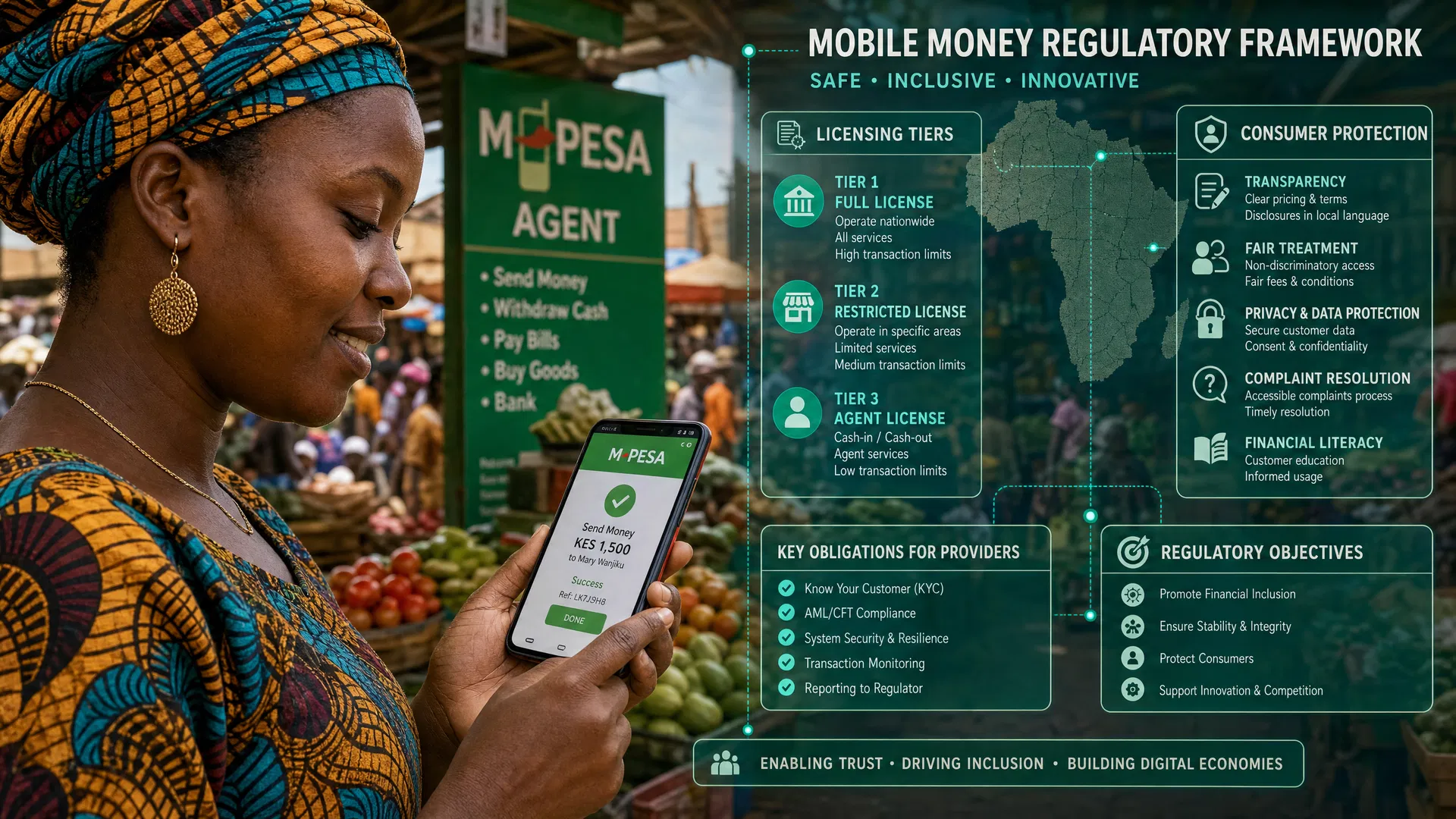
The regulation of digital financial services in Côte d'Ivoire is primarily governed by the BCEAO's regulatory framework. A pivotal development in this area was the issuance of the 2015 instruction on electronic money, which updated earlier rules and established a clear legal foundation for e-money issuers (EMEs). The instruction defines e-money, sets out the licensing requirements for non-bank entities, and outlines the operational and prudential standards that EMEs must adhere to.
Under the BCEAO framework, fintech companies seeking to issue e-money or provide payment services must obtain the appropriate authorization. The central bank has been proactive in licensing fintechs, recently approving several entities as payment institutions in Côte d'Ivoire. This regulatory clarity has spurred the growth of mobile money and digital payments, with mobile network operators (MNOs) establishing e-money subsidiaries to expand their service offerings.
However, the regulatory landscape also presents challenges. The BCEAO imposes strict requirements on the safeguarding of customer funds, mandating that e-money issuers hold equivalent funds in trust accounts at commercial banks. Additionally, the framework includes stringent Know Your Customer (KYC) and Anti-Money Laundering/Combating the Financing of Terrorism (AML/CFT) obligations, which require robust identity verification processes.
Compliance Implications and Enforcement Mechanisms
For digital asset platforms operating in Côte d'Ivoire, the compliance implications are multifaceted. Operators must navigate the dual regulatory oversight of the BCEAO and ARTCI, ensuring adherence to both financial regulations and data protection laws. This requires the implementation of comprehensive compliance programs that encompass data privacy, cybersecurity, AML/CFT, and consumer protection.
Enforcement mechanisms in Côte d'Ivoire are robust, with regulatory authorities empowered to impose significant sanctions for non-compliance. ARTCI has the authority to conduct investigations, issue warnings, and levy financial penalties against entities that violate data protection or telecommunications regulations. Similarly, the BCEAO, in conjunction with the regional Banking Commission, conducts regular supervision of licensed financial institutions and can revoke licenses or impose fines for regulatory breaches.
To mitigate compliance risks, digital asset platforms must adopt a proactive approach. This includes conducting regular regulatory risk assessments, engaging with regulatory authorities, and investing in advanced compliance technologies. Furthermore, platforms should ensure that their operations align with international standards, such as the FATF recommendations and the ISO 20022 messaging standard, to facilitate cross-border interoperability and regulatory acceptance.
Preparing for the Future of Digital Assets
As Côte d'Ivoire continues to advance its digital economy, the regulatory framework is expected to evolve to address emerging technologies such as tokenization, stablecoins, and Central Bank Digital Currencies (CBDCs). The BCEAO has already signaled its interest in these areas, planning international conferences on crypto-assets and digital innovations to foster dialogue and explore regulatory approaches.
For platforms like AfriVest, preparing for this future requires a strategic focus on regulatory alignment and technological innovation. By building infrastructure that complies with both regional data protection laws and international financial standards, platforms can position themselves as trusted partners in Africa's digital transformation.
In conclusion, Côte d'Ivoire's digital economy regulatory framework provides a solid foundation for the growth of fintech and digital assets. While challenges remain, particularly in navigating the dual regulatory structure and ensuring compliance with stringent data protection and financial regulations, the opportunities for innovation and financial inclusion are immense. As Africa's digital economy continues to expand, Côte d'Ivoire will undoubtedly play a central role in shaping the future of digital finance on the continent.