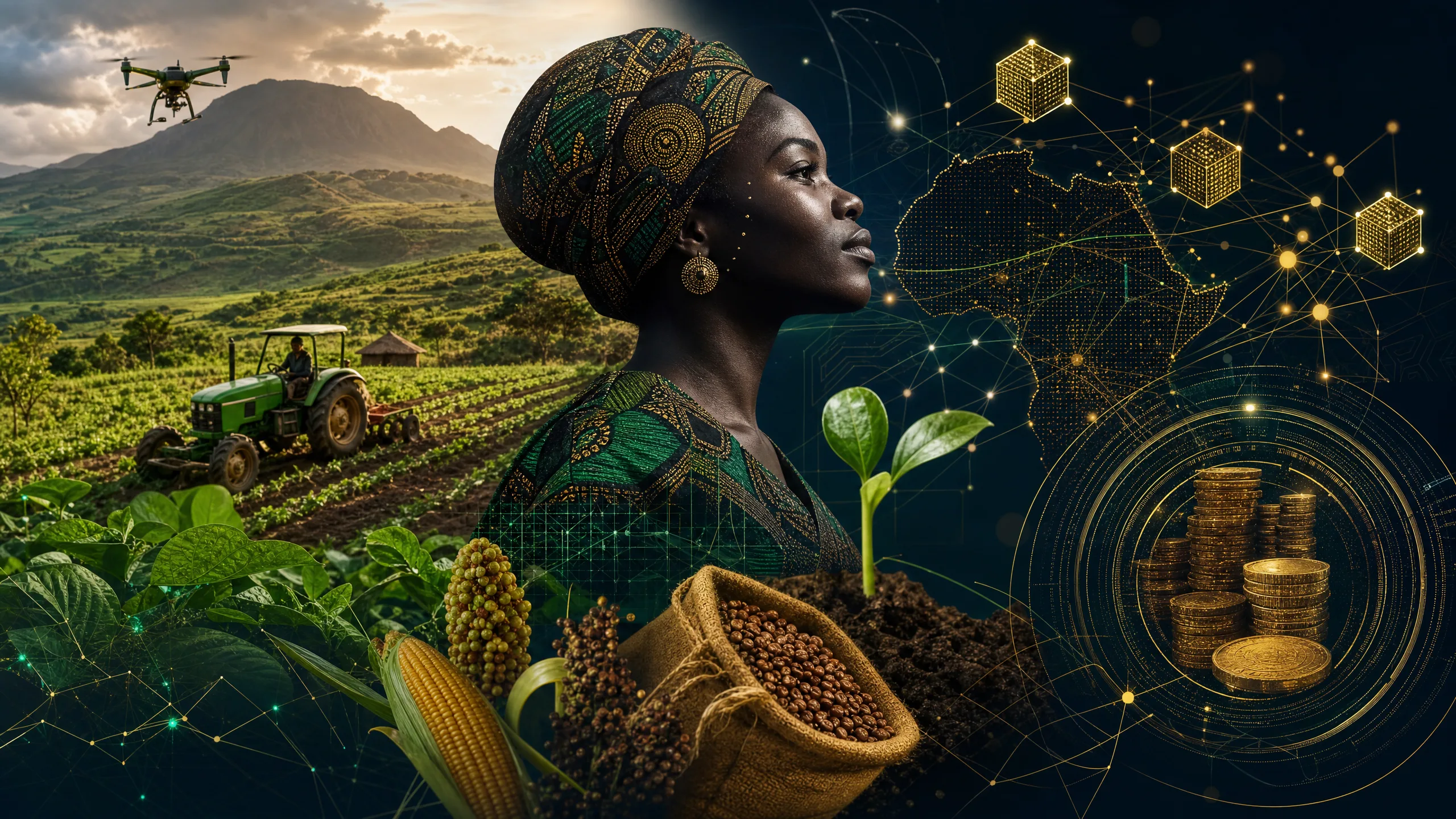
Introduction: The Digital Revolution in East African Agriculture
Agriculture remains the backbone of East Africa's economy, employing approximately 65-70% of the population in countries such as Kenya, Tanzania, Uganda, and Rwanda. Despite its significance, the sector has traditionally faced challenges such as limited access to finance, fragmented supply chains, and low productivity. The integration of digital finance and blockchain technology is now ushering in a new era for East African agriculture, enabling more inclusive financial ecosystems, transparent value chains, and innovative cooperative models. This article explores how these technologies are intersecting to transform the agricultural landscape across the region.
Digital Finance: Unlocking Access to Capital for Farmers
One of the primary barriers for smallholder farmers in East Africa has been access to affordable and timely finance. Traditional banking systems often find it difficult to evaluate risk for agricultural loans due to lack of formal credit histories and collateral. Digital finance platforms, including mobile money services like M-Pesa in Kenya and MTN Mobile Money in Uganda and Tanzania, have revolutionized how farmers transact and access financial services. These platforms facilitate microloans, insurance products, and savings mechanisms tailored for agricultural cycles.
A notable example is Kenya's M-Shwari platform, which leverages mobile money data to offer instant microloans to users, including farmers. According to the Central Bank of Kenya, over 2 million farmers have accessed digital credit through such platforms by 2025, enabling them to purchase inputs like seeds and fertilizers timely. This increased access to capital has contributed to a 15% growth in crop yields in some regions, demonstrating the tangible impact of digital finance on agricultural productivity.
Blockchain Technology: Enhancing Transparency and Traceability
Blockchain technology offers a decentralized and immutable ledger system that can dramatically improve transparency and traceability in agriculture supply chains. In East Africa, where supply chains can be fragmented and opaque, blockchain is helping to build trust among stakeholders including farmers, cooperatives, buyers, and financial institutions.
For instance, in Rwanda, the government-backed blockchain pilot project launched in 2024 helps coffee farmers record their crop data and transactions on a blockchain ledger. This system allows buyers in international markets to verify the origin and quality of coffee beans instantly, ensuring fair pricing and reducing the risk of fraud. The project has increased farmer incomes by an average of 20% by enabling them to bypass intermediaries and gain direct access to premium markets.
Moreover, blockchain facilitates smart contracts that automate payments upon delivery verification. This removes delays in settling transactions and enhances liquidity for farmers. In Tanzania, the Tanzanian Coffee Board implemented blockchain-based smart contracts in 2025, reducing payment delays from 30 days to under 5 days, thus improving cash flows for over 50,000 coffee farmers.
Tokenization and Cooperative Economics: Empowering Farmer Communities
Tokenization—the process of representing real assets or rights as digital tokens on a blockchain—has opened new avenues for cooperative economics in East African agriculture. By tokenizing agricultural assets such as land, livestock, or anticipated harvests, farming cooperatives can pool resources and attract investments from a wider base of stakeholders.
In Uganda, a pioneering project launched in 2025 enabled a cooperative of over 1,000 smallholder maize farmers to tokenize their collective harvest. Each token represented a share of the cooperative’s produce, which could be traded or used as collateral for loans. This innovation allowed farmers to raise $1.2 million in digital financing within the first six months, which was reinvested into improving storage facilities and acquiring better inputs.
Tokenization also promotes inclusivity by enabling diaspora and urban investors to participate in rural agriculture projects remotely. For example, Kenyan diaspora investors used tokenized assets to fund irrigation projects in Makueni County, resulting in a 25% increase in farm productivity during the 2025 planting season. This model strengthens cooperative economics by aligning incentives and distributing profits transparently through blockchain-enabled governance.
Challenges and Future Outlook
Despite these promising developments, challenges remain in scaling blockchain and digital finance solutions across East African agriculture. Infrastructure limitations, such as unreliable internet connectivity in rural areas, hinder widespread adoption. Additionally, regulatory frameworks around digital assets and fintech are still evolving, creating uncertainty for innovators and investors.
Education and digital literacy also play a critical role. Many smallholder farmers require capacity building to effectively use digital tools and understand blockchain concepts. Governments, NGOs, and private sector actors must collaborate to provide training and build trust in these new technologies.
Looking forward, the convergence of blockchain, digital finance, and tokenization holds transformative potential for East African agriculture. As these technologies mature and become more accessible, they will enable more efficient supply chains, democratize access to capital, and empower farming communities through cooperative economic models. With continued investment and supportive policies, East Africa can lead the way in creating a digitally enabled, inclusive, and sustainable agricultural future.
Conclusion
The integration of blockchain and digital finance in East African agriculture is redefining how farmers access capital, manage supply chains, and engage in cooperative economics. Real-world examples from Kenya, Rwanda, Tanzania, and Uganda demonstrate measurable improvements in productivity, income, and market access driven by these innovations. While challenges remain, the ongoing digital transformation presents a unique opportunity to unlock the full potential of agriculture in the region, fostering resilience and prosperity for millions of smallholder farmers.