The Intersection of Digital Finance and Agriculture in West Africa
The agricultural sector has long been the backbone of West Africa's economy, employing over 60% of the region's workforce and contributing significantly to the gross domestic product (GDP) of nations like Nigeria, Ghana, and Côte d'Ivoire. Despite its critical importance, the sector has historically suffered from systemic inefficiencies, lack of access to capital, and opaque supply chains. However, the rapid expansion of digital finance across the continent is beginning to address these long-standing challenges. Mobile money platforms, digital lending services, and fintech innovations are providing smallholder farmers with unprecedented access to financial services, enabling them to purchase quality inputs, manage risks, and access broader markets. This digital transformation is not merely an upgrade of existing systems; it represents a fundamental shift in how agricultural value is created, measured, and distributed across the region.
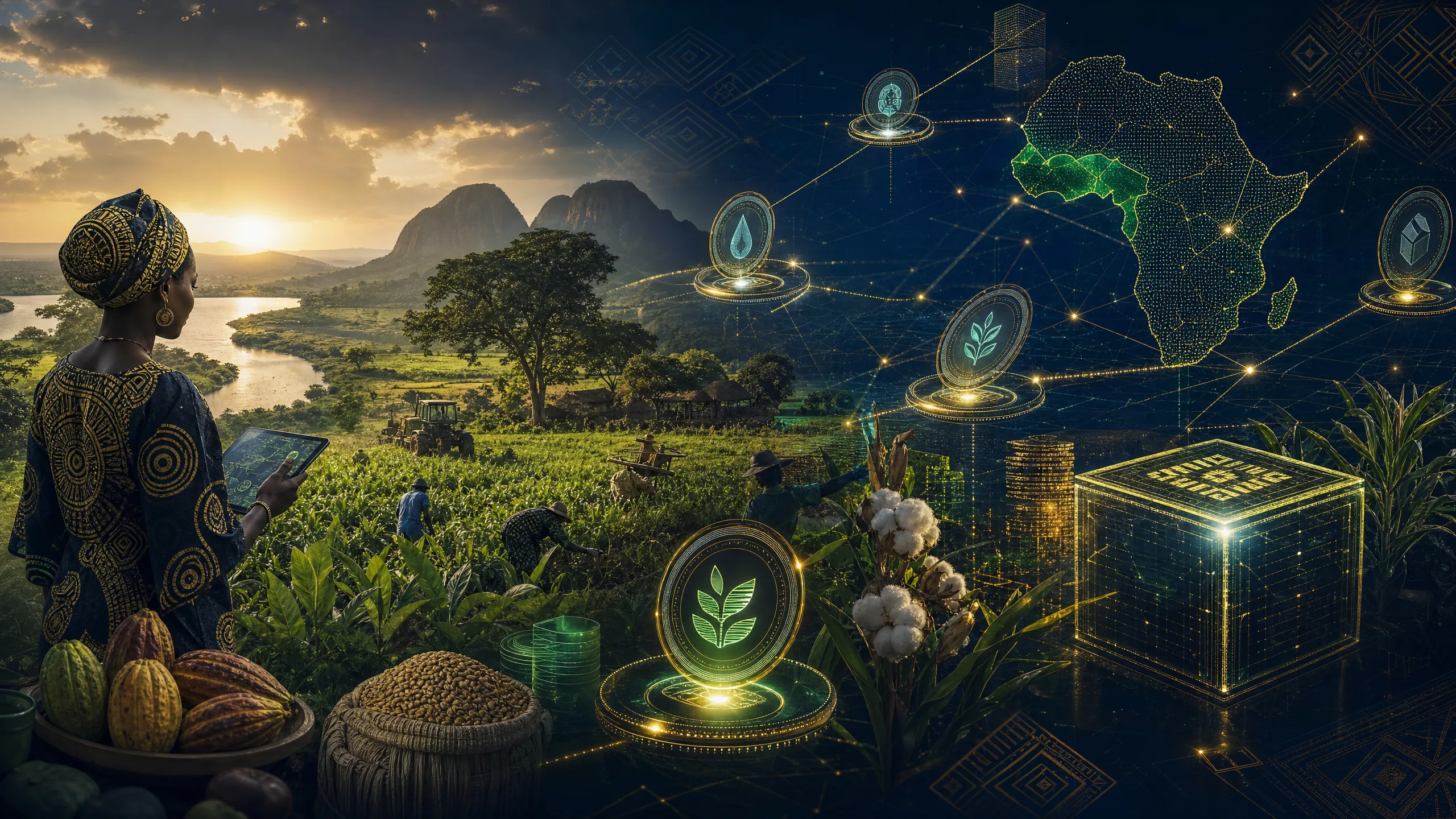
As digital finance infrastructure matures, it creates a fertile foundation for more advanced technological interventions. The integration of mobile connectivity with financial services has established a digital footprint for millions of previously unbanked farmers. This data trail is crucial for building credit profiles and assessing risk, which in turn attracts institutional investment into the sector. Furthermore, the digitization of payments reduces the friction and security risks associated with cash transactions, fostering a more transparent and efficient agricultural ecosystem. The convergence of these digital tools is setting the stage for a revolutionary approach to resource management and capital allocation in West African agriculture, paving the way for sophisticated solutions like blockchain farming and asset tokenization.
Understanding Agriculture Tokenization and Its Potential
Agriculture tokenization represents the next frontier in the digital transformation of farming. At its core, tokenization involves converting the rights to an agricultural asset—whether it be a plot of land, a harvest yield, or farming equipment—into a digital token on a blockchain. These tokens can then be bought, sold, or traded on digital platforms, effectively fractionalizing ownership and democratizing access to agricultural investments. In West Africa, where land tenure systems are often complex and access to large-scale capital is limited, agriculture tokenization offers a transformative mechanism to unlock the latent value of agricultural resources. By representing physical assets as digital tokens, farmers can raise capital directly from a global pool of investors without relying on traditional, often inaccessible, banking institutions.
The potential of agriculture tokenization extends beyond mere capital raising; it fundamentally alters the dynamics of agricultural supply chains. Tokens can be programmed with smart contracts that automatically execute transactions when predefined conditions are met, such as the successful delivery of a crop or the verification of sustainable farming practices. This level of automation and transparency significantly reduces counterparty risk and administrative overhead. For institutional investors, tokenized agricultural assets provide a novel asset class that offers portfolio diversification and direct exposure to the real economy of West Africa. As regulatory frameworks begin to adapt to these innovations, the tokenization of agricultural resources is poised to become a cornerstone of the region's digital economy, driving both economic growth and food security.
Blockchain Farming: Enhancing Transparency and Traceability
Blockchain farming is emerging as a critical component of the modernized agricultural landscape in West Africa. By leveraging distributed ledger technology, blockchain farming creates an immutable, transparent record of every transaction and movement within the agricultural supply chain. From the moment a seed is planted to the point a finished product reaches the consumer, every step can be recorded and verified on the blockchain. This unprecedented level of traceability is particularly valuable in West Africa, where post-harvest losses and supply chain inefficiencies have historically hampered the sector's profitability. With blockchain, stakeholders can pinpoint bottlenecks, optimize logistics, and ensure that fair value is distributed equitably among all participants, especially the smallholder farmers who form the base of the pyramid.
Moreover, blockchain farming addresses the growing global demand for sustainably sourced and ethically produced agricultural commodities. Consumers and international buyers are increasingly requiring verifiable proof of origin, fair labor practices, and environmental stewardship. Blockchain provides a robust mechanism to certify these attributes, allowing West African farmers to command premium prices in international markets. For instance, cocoa farmers in Côte d'Ivoire or cashew growers in Nigeria can use blockchain to prove the provenance of their crops, differentiating their products from those of competitors. This enhanced transparency not only boosts the economic viability of individual farms but also elevates the reputation of West African agriculture on the global stage, attracting further investment and fostering long-term sustainability.
Revolutionizing Resource Management Through Digital Tools
Effective resource management is a perennial challenge in West African agriculture, exacerbated by climate change, unpredictable weather patterns, and limited access to modern farming techniques. Digital finance and blockchain technologies are revolutionizing how resources are managed, allocated, and optimized. Through the integration of Internet of Things (IoT) devices, satellite imagery, and blockchain networks, farmers can now access real-time data on soil moisture, weather forecasts, and crop health. This data-driven approach enables precision agriculture, where resources such as water, fertilizers, and pesticides are applied only when and where they are needed. Consequently, farmers can significantly increase their yields while minimizing waste and environmental impact, leading to more sustainable and profitable farming operations.
The tokenization of resources further enhances this management paradigm. For example, water rights or carbon credits generated through sustainable farming practices can be tokenized and traded, creating new revenue streams for farmers. This incentivizes the adoption of environmentally friendly practices and promotes the efficient use of scarce resources. Additionally, digital platforms can facilitate the sharing of expensive farming equipment through tokenized ownership models, allowing smallholder farmers to access machinery that would otherwise be unaffordable. By combining data analytics with the financial flexibility of tokenization, West Africa is developing a highly efficient, resilient agricultural sector capable of meeting the demands of a growing population and a changing climate.
Overcoming Regulatory and Infrastructure Challenges
While the promise of digital finance and agriculture tokenization is immense, realizing this potential requires navigating significant regulatory and infrastructure challenges. The regulatory landscape in West Africa is currently fragmented, with varying degrees of acceptance and understanding of blockchain technology and digital assets across different countries. Policymakers must strike a delicate balance between fostering innovation and protecting consumers from fraud and market volatility. Establishing clear, harmonized regulatory frameworks that provide legal certainty for tokenized assets and smart contracts is essential for attracting institutional capital and scaling these solutions across the region. Collaborative efforts between governments, regulatory bodies, and industry stakeholders are crucial to developing policies that support the growth of the digital agricultural economy.
Infrastructure limitations also pose a substantial barrier to the widespread adoption of these technologies. While mobile penetration has grown rapidly, reliable internet connectivity and access to electricity remain inconsistent in many rural farming communities. Furthermore, there is a pressing need for digital literacy programs to ensure that farmers can effectively utilize these new tools. Addressing these infrastructure gaps requires coordinated investment from both the public and private sectors. Initiatives aimed at expanding broadband access, developing off-grid renewable energy solutions, and providing targeted training programs will be vital in ensuring that the benefits of digital finance and blockchain farming are accessible to all, rather than being concentrated among a privileged few.
The Future of Africa's Digital Economy and Agriculture
The integration of digital finance, agriculture tokenization, and blockchain farming is not just an agricultural revolution; it is a critical driver of Africa's broader digital economy transformation. As these technologies mature and scale, they will create a more inclusive, transparent, and efficient economic ecosystem. The data generated by digitized agricultural supply chains will fuel the development of new financial products, insurance models, and predictive analytics, further embedding agriculture into the digital economy. This convergence will unlock billions of dollars in latent value, transforming West Africa from a region characterized by subsistence farming into a global powerhouse of tech-enabled, sustainable agriculture.
Looking forward, the opportunities for digital infrastructure development in this space are boundless. Institutional investors and technology providers have a unique window to build the foundational platforms that will power the next generation of African agriculture. From decentralized finance (DeFi) protocols tailored for rural lending to blockchain-based commodity exchanges, the innovations developed in West Africa could serve as blueprints for emerging markets worldwide. By embracing these digital tools, West Africa is not only securing its food supply and empowering its farmers but also positioning itself at the forefront of the global digital economy, ready to capitalize on the immense opportunities of the 21st century.