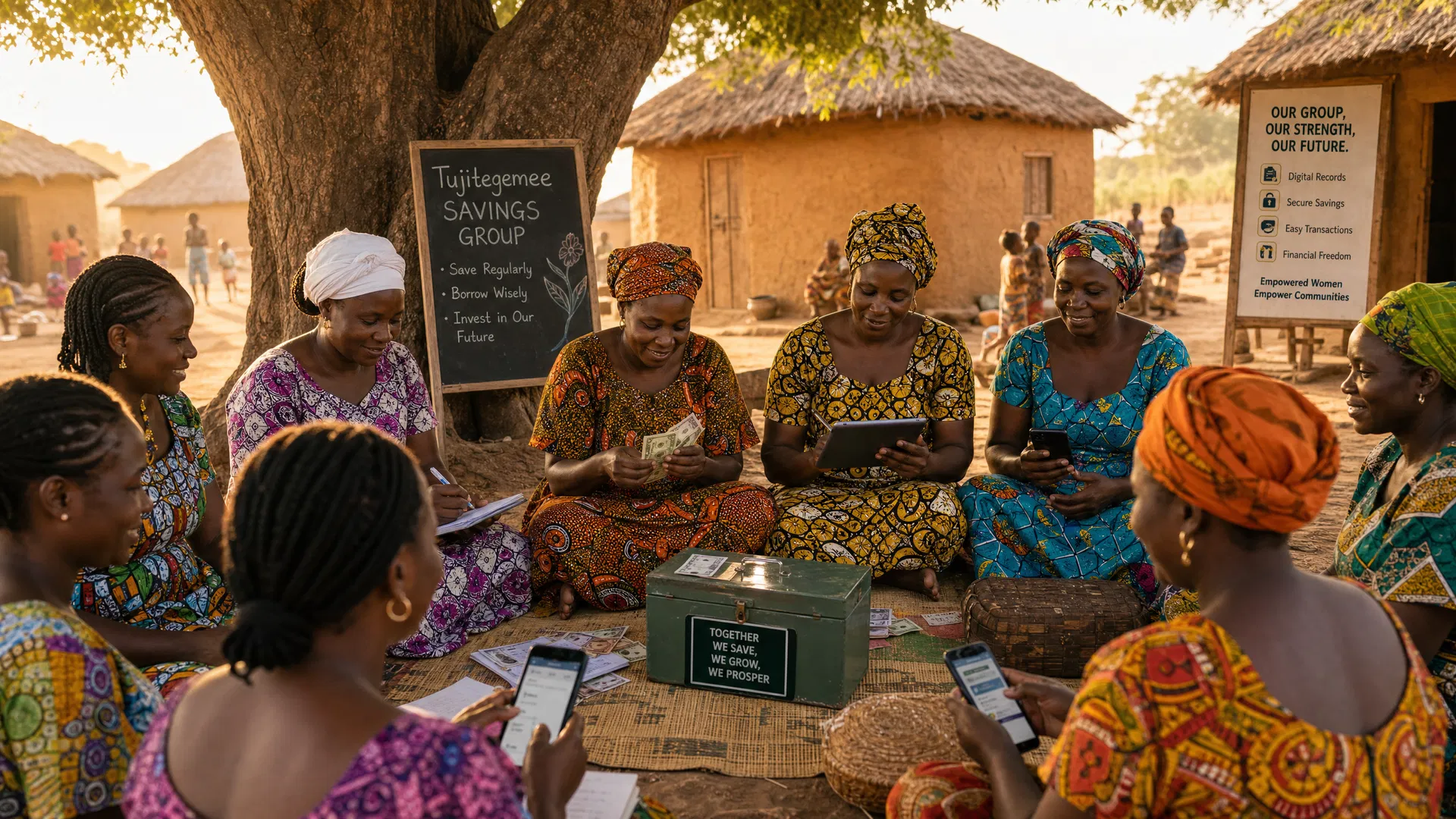
Across the African continent, women-led savings groups have long served as the bedrock of community resilience and economic empowerment. Known as chamas in East Africa, tontines in West Africa, and stokvels in South Africa, these informal cooperatives manage billions of dollars annually. They finance everything from healthcare emergencies to agricultural inputs and enterprise expansion. For generations, the matriarchs of these communities have orchestrated complex financial operations relying entirely on social capital and manual record-keeping. However, despite their localized success and massive aggregate scale, these groups remain confined to the informal economy. This isolation limits their capacity for exponential growth, exposes their capital to physical security risks, and systematically excludes them from participating in broader credit markets where their collective financial discipline could command significant leverage.
The magnitude of this informal financial sector is staggering, yet its potential remains structurally constrained. In Kenya alone, industry estimates suggest there are over three hundred thousand registered chamas managing approximately 3.4 billion dollars in collective assets. The traditional operational model involves physical cash collected during meetings, stored in locked boxes, and recorded in paper ledgers. While this system fosters deep community cohesion, the physical nature of cash handling exposes members to theft. More critically, paper-based accounting prevents these groups from building the verifiable, standardized credit histories required by commercial banks. Consequently, even groups with decades of flawless repayment records are routinely denied access to institutional capital that could catalyze their transition from micro-survival to macro-enterprise.
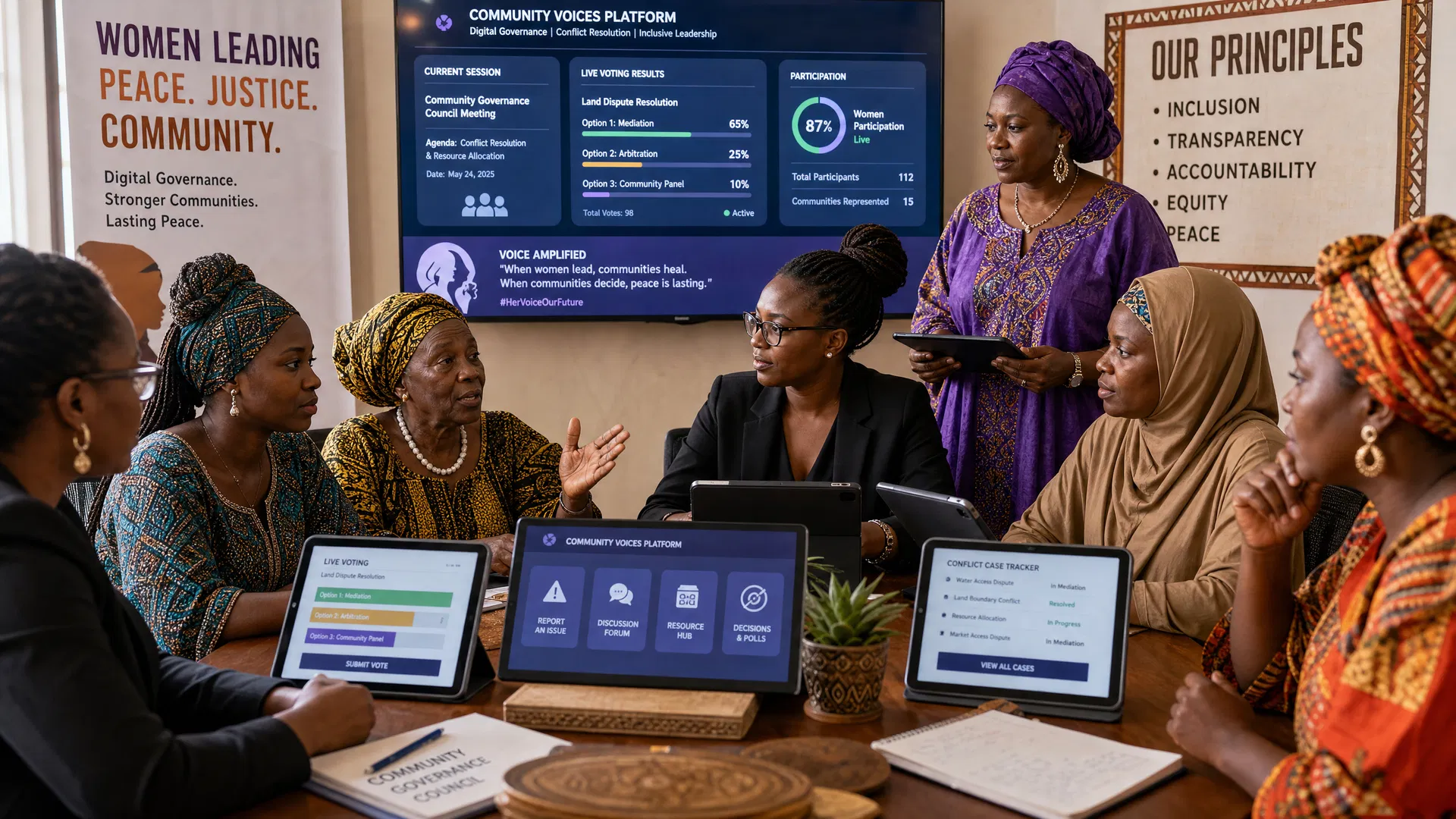
The advent of mobile money platforms altered the landscape of individual transactions in Africa, but the architecture of group savings requires significantly more sophisticated governance mechanisms. The transition from physical cash boxes to shared digital wallets represented a crucial first step. Yet, true scalability for these cooperatives demands comprehensive systems capable of executing transparent accounting, automating dividend distributions, and facilitating secure voting processes. The limitations of basic mobile money become apparent when managing the nuanced rules of a fifty-member cooperative, where loan approvals and default penalties require continuous oversight. This operational bottleneck highlights the urgent need for advanced digital infrastructure designed specifically for cooperative governance, moving beyond simple value transfer to encompass full institutional financial management.
Blockchain technology and asset tokenization present a transformative solution to the structural limitations of traditional savings groups. By leveraging distributed ledger technology, these informal cooperatives can seamlessly transition into integrated, digitally native financial entities. Tokenization allows a savings group to digitize its collective assets and individual member contributions, creating an immutable, transparent record of every transaction. Furthermore, the implementation of smart contracts can autonomously enforce the group's specific bylaws. These programmable contracts ensure that loans are disbursed only when consensus is reached, and dividends are distributed automatically according to predefined conditions. This cryptographic automation virtually eliminates the administrative burden on group leaders and guarantees that the rules of the cooperative are executed with absolute mathematical certainty.
Perhaps the most profound implication of integrating blockchain infrastructure is its capacity to bridge the historical divide between informal community finance and global capital markets. When a savings group's financial history is recorded on a public or consortium blockchain, it generates a verifiable, tamper-proof credit profile. This robust data architecture allows institutional lenders to algorithmically underwrite loans with unprecedented accuracy. For instance, a women's agricultural cooperative in rural Rwanda could leverage its tokenized, multi-year savings history to secure commercial financing for industrial-grade solar irrigation systems. By transforming social trust into cryptographic proof, these groups can unlock access to the global liquidity pools necessary to multiply their productivity and exponentially increase their income-generating potential.
The digitization and tokenization of women's savings groups catalyze a broader macroeconomic transformation. It fundamentally redefines the economic agency of African women by providing them with secure, indisputable property rights over their digital assets. In regions characterized by macroeconomic volatility, tokenizing savings into asset-backed instruments offers a critical shield against currency depreciation. Furthermore, this digital infrastructure facilitates seamless cross-border participation, enabling diaspora members to contribute directly to community development projects with complete transparency. This interconnectedness transforms localized savings groups into dynamic nodes within a continent-wide digital economy, amplifying their collective purchasing power and enabling them to participate in large-scale investments that were previously the exclusive domain of institutional investors.
At AfriVest, we recognize that the future of Africa's digital economy must be constructed upon the foundation of its most resilient institutions. By providing the sophisticated digital infrastructure required for asset tokenization and cooperative governance, AfriVest empowers the matriarchs of microfinance to scale their operations securely. Our platform is meticulously designed to ensure that the profound social trust inherent in traditional savings groups is preserved and amplified through cryptographic security. As we continue to deploy these technologies, AfriVest remains committed to transforming informal community capital into a recognized, powerful asset class. Through this synthesis of traditional cooperative principles and cutting-edge digital infrastructure, we are paving the way for unprecedented financial inclusion and a truly digitized African economy.