
For over a century, Africa has been the undisputed epicenter of global diamond production, supplying the world with its most coveted gemstones. Yet, historically, the continent captured only a fraction of the industry's total economic value, exporting rough stones while the lucrative cutting, polishing, and retail margins were realized abroad. Today, a profound transformation is underway. Driven by robust beneficiation policies and technological advancements, Africa's diamond industry is evolving from a $15 billion rough extraction sector into a comprehensive, polished value chain. For institutional investors and policymakers, this shift represents a monumental opportunity to participate in the digitization and tokenization of one of the world's most enduring asset classes.
The Scale of African Diamond Production
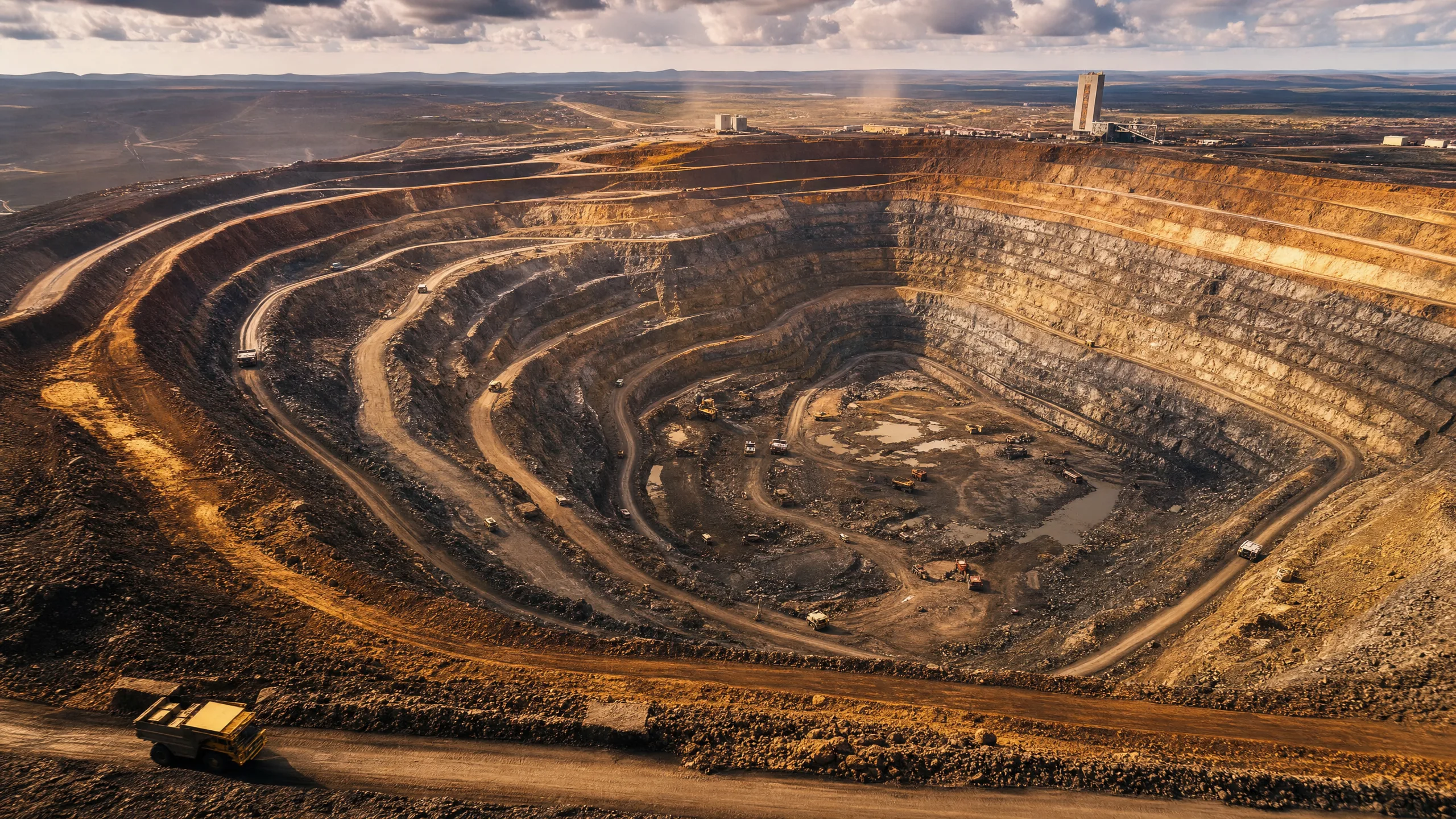
Africa accounts for approximately 60% of the world's diamond production by volume and value, making it the cornerstone of the global trade. Nations such as Botswana, Angola, South Africa, and Namibia form the backbone of this continental powerhouse. Botswana alone, anchored by the prolific Jwaneng and Orapa mines—often cited as the richest diamond mines globally by value—produces over 24 million carats annually. In Angola, the Catoca mine remains one of the largest kimberlite pipes in the world, contributing significantly to the country's $1.5 billion annual diamond revenue and positioning Angola as a rising star in global production.
These figures underscore the sheer scale of the African diamond sector. In Botswana, diamonds contribute roughly 80% of export earnings and a third of the national GDP, illustrating the critical macroeconomic reliance on this precious resource. South Africa's Venetia mine, currently undergoing a massive $2 billion underground expansion, further highlights the long-term capital commitments being made to sustain production. However, the traditional model of exporting unpolished rough diamonds has historically limited the economic multiplier effect within these producing nations, prompting a strategic rethink at the highest levels of government.
The Push for Beneficiation and Local Value Addition
The paradigm is shifting rapidly as African governments implement stringent beneficiation policies designed to retain more of the diamond value chain domestically. Beneficiation mandates require a percentage of locally mined rough diamonds to be cut and polished within the country of origin before export, fundamentally altering the historical trade dynamics.
Botswana has led this charge by renegotiating its long-standing agreements with De Beers, ensuring that a larger share of rough diamonds is allocated to the state-owned Okavango Diamond Company. Furthermore, the establishment of the Diamond Technology Park in Gaborone has attracted leading global sightholders to set up local cutting and polishing facilities, transforming the capital into a bustling diamond hub. Similarly, Namibia and South Africa have established state diamond traders to supply local beneficiators and foster indigenous enterprise. This strategic pivot not only creates high-skilled employment but also captures the significant margins associated with the midstream segment of the diamond value chain, which has traditionally been dominated by centers in India and Europe.
Navigating Market Dynamics and Synthetic Competition
While the push for local value addition is gaining momentum, the African diamond industry faces evolving market dynamics, notably the rapid rise of lab-grown diamonds (LGDs). The LGD market has introduced pricing pressures on natural diamonds, particularly in the smaller carat categories, forcing African producers to differentiate their offerings.
However, the intrinsic value of natural African diamonds remains robust, driven by their rarity, historical significance, and the emotional premium attached to natural stones. To maintain competitiveness, African producers are increasingly focusing on provenance and traceability. Initiatives like the Kimberley Process have long sought to eliminate conflict diamonds, but modern consumers and investors demand even greater transparency. Blockchain technology and digital tracking are now being deployed to trace a diamond's journey from the mine to the retail market, ensuring ethical sourcing and enhancing the premium on natural African diamonds. This verifiable provenance is becoming a critical competitive advantage for African stones in the global luxury market.
The Economic Impact of a Polished Value Chain
Transitioning to a polished value chain has profound economic implications for the continent. The global diamond jewelry market is valued at over $80 billion annually, yet the rough production segment captures only a fraction of this total. By capturing even a modest additional percentage of the midstream (cutting and polishing) and downstream (retail) segments, African nations can exponentially increase their diamond-derived revenues.
For instance, a rough diamond valued at $1,000 can see its value increase by 30% to 50% once cut and polished, and multiply further when set in retail jewelry. By fostering local hubs for jewelry manufacturing and design, countries like South Africa and Botswana are attempting to capture this downstream value. This economic diversification is crucial for mitigating the volatility of raw commodity prices, building resilient economies, and generating the capital required for broader infrastructure and social development.
Conclusion: Digitization and the Tokenization Opportunity
The evolution of Africa's diamond industry from rough extraction to a polished value chain is a testament to the continent's growing economic sophistication. As beneficiation policies mature and local capacities expand, the value retained within Africa will continue to rise, transforming resource wealth into sustainable economic development.
Looking forward, the integration of digital infrastructure presents the next frontier for this historic industry. Platforms like AfriVest are pioneering the digitization of Africa's assets, and diamonds are prime candidates for tokenization. By creating digital tokens backed by physical, ethically sourced, and fully traceable African diamonds, the industry can unlock unprecedented liquidity, reduce transaction friction, and democratize access for global institutional investors. This convergence of traditional resource wealth and cutting-edge financial technology will not only redefine the African diamond trade but also establish a new paradigm for asset-backed digital investments on the continent, securing Africa's position at the forefront of the global digital economy.